Most Shopify store owners treat their product descriptions like an afterthought. They write a few bullet points, copy some specs from the supplier, and move on. Then they wonder why their product pages convert at 1-2% when the industry benchmarks say 3-5% is achievable. The gap? Persuasive copywriting that turns browsers into buyers.
What’s in This Article
Your product description is your virtual sales pitch. It has to do the job of a skilled retail associate — answer questions, overcome objections, create desire, and close the sale — all in about 200-400 words. That is a tall order, but the brands that nail it see dramatic differences in conversion rates, often 30-50% higher than the same product with a generic description.
Here is the copywriting framework that works for Shopify product pages across every category, whether you sell skincare, electronics, fashion, or home goods. If you want to audit your existing pages first, our 7-point product page audit is a great starting point.
The Anatomy of a High-Converting Product Description
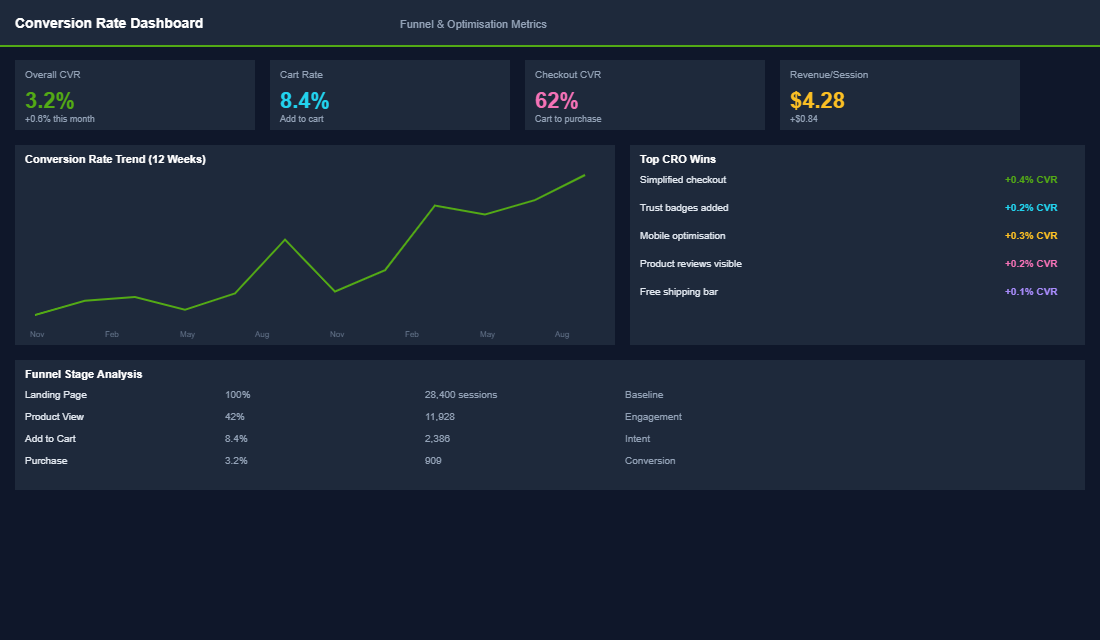
Every effective product description has four components that work together to move the customer from interest to action. Miss any one of these and you leave conversion on the table.
Component 1: The opening hook (1-2 sentences). Your first sentence should speak directly to the customer’s desire or problem. Not “This moisturiser contains hyaluronic acid.” Instead: “Wake up to skin that actually feels hydrated — not tight, not oily, just perfectly balanced.” Lead with the outcome the customer wants, not the feature that delivers it. Features are for later. The hook is about creating an emotional “yes, that is what I want” response.
Stores that lead with outcome-driven hooks see 15-25% higher scroll depth on their product pages compared to feature-first descriptions. That extra engagement translates directly into more add-to-carts.
Component 2: Benefits-driven body (3-5 key benefits). Translate every feature into a benefit the customer cares about. “Contains 2% hyaluronic acid” becomes “Hyaluronic acid at 2% draws moisture deep into your skin, keeping it plump and hydrated for up to 72 hours — even in air conditioning.” The formula is simple: Feature + “which means” + Benefit for the customer. Apply this to your 3-5 most important features.
Here is a practical example. Imagine you sell a bamboo cutting board. Your supplier spec says “Made from 100% Moso bamboo, 38cm x 28cm, 2cm thick.” Your benefits-driven version says: “Crafted from Moso bamboo — naturally antibacterial, so your board stays hygienic between cleans. At 2cm thick, it absorbs knife impact without warping, protecting both your blades and your benchtops for years.” Same product. Completely different buying motivation.
Component 3: Objection handling (2-3 sentences). Address the unspoken concerns that stop people from clicking “Add to Cart.” According to Baymard Institute research, 18% of cart abandonments happen because shoppers could not find enough information to feel confident in their purchase. Your copy needs to close that gap before they bounce.
For skincare: “Dermatologist tested. Free from parabens, sulfates, and artificial fragrances. Suitable for sensitive skin.” For fashion: “Pre-washed to prevent shrinkage. True to size — order your usual size.” For electronics: “Compatible with all devices. Backed by our 2-year Australian warranty.” Anticipate what would make them hesitate and proactively resolve it.
Component 4: The specifics (scannable details). Bullet points or a specs section covering dimensions, materials, ingredients, care instructions, what is included, and any certifications. This section is for the detail-oriented buyer who has already decided they want it and just needs to confirm the specifics before purchasing. Tools like Shopify’s metafields and apps like EComposer or GemPages make it easy to create structured, visually appealing spec sections without custom code.
Writing for Scanners: How People Actually Read Product Pages
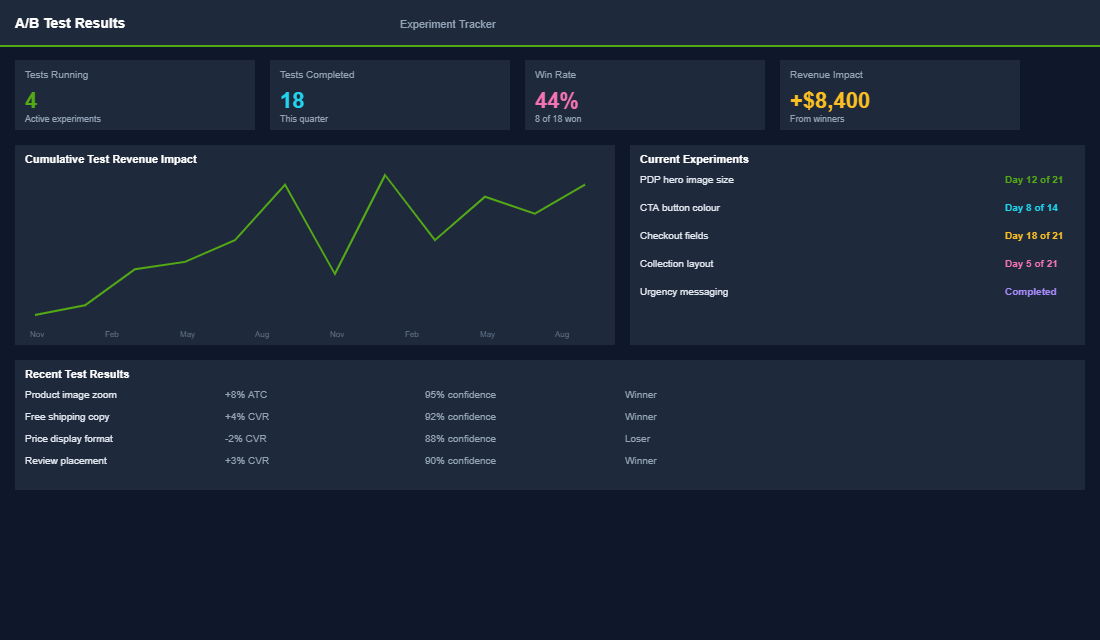
Here is a fact that should change how you write every product description: 79% of web visitors scan rather than read. They skim headlines, bold text, and bullet points. If your key selling points are buried in a paragraph of text, most visitors will never see them. This is even more critical on mobile, where over 70% of Shopify traffic now comes from phones and screen real estate is limited.
Use bold text for key benefits. Make your most important selling points impossible to miss. When someone scans your description, the bold text should tell the complete story: “72-hour hydration… dermatologist tested… visible results in 14 days…” Even a scanner gets the message.
Break text into short paragraphs. No paragraph should be longer than 2-3 sentences. Wall-of-text descriptions are intimidating on desktop and impossible on mobile. Short paragraphs create white space that makes the page feel easier to digest.
Use bullet points for features and specs. Scanners love bullet points. Use them for your technical details, ingredients, dimensions, and “what is included” sections. But keep your opening hook and benefits in paragraph form — bullet points for benefits feel cold and transactional.
Front-load every sentence. Put the most important word or phrase at the beginning of each sentence. “Organic cotton grown in Victoria” is better than “Made from cotton that is organically grown in the state of Victoria.” Scanners read the first few words of each line and skip the rest.
Use heatmap tools to validate your formatting. Tools like Hotjar or Microsoft Clarity (which is free) let you see exactly where visitors focus their attention on your product pages. Run a heatmap for 7-14 days, then check whether your key selling points sit in the hot zones. If they do not, restructure your description until they do. Brands that optimise based on heatmap data typically see a 10-20% improvement in add-to-cart rates within 30 days.
SEO Copywriting: Rank and Convert Simultaneously
Your product descriptions need to do double duty: convert visitors AND rank in Google. Here is how to optimise for both without sacrificing readability. For a deeper look at product page SEO specifically, see our guide on ranking your Shopify product pages without paying for traffic.
Include your target keyword naturally. Each product page should target a specific keyword — usually “[product type] + [key attribute]” like “organic cotton t-shirt women” or “wireless noise-cancelling earbuds.” Include this keyword in your product title, the first 100 words of your description, at least one subheading (if you use them), and your meta title and description. But never force it — if the keyword reads awkwardly, rephrase naturally.
Write unique descriptions for every product. Duplicate content across product pages hurts your SEO. If you sell 50 t-shirts that are essentially the same product in different colours, write a unique opening and benefit section for each — even if the specs section is similar. At minimum, vary 60-70% of the copy between similar products. Use Rank Math or Yoast SEO (or Shopify’s built-in SEO fields) to check each page scores well before publishing.
Use long-tail keywords in your body copy. Beyond your primary keyword, weave in related search terms naturally: “best moisturiser for dry skin Australia,” “lightweight summer t-shirt,” “gift ideas for him.” These long-tail keywords capture additional search traffic from people using specific, purchase-ready search queries. Long-tail keywords typically convert at 2-3x the rate of head terms because the search intent is much clearer.
Category-Specific Copywriting Tips
Different product categories demand different copywriting angles. Here is how to tailor your approach for maximum impact in each vertical.
- Fashion and apparel: Focus on fit, feel, and occasion. Describe how it fits on the body (relaxed, slim, oversized), the fabric feel (soft, structured, breathable), and when to wear it (office, weekend, evening). Include size and fit notes: “Model wears size M and is 175cm tall.” Size-related uncertainty is the number one reason fashion returns happen — clear fit guidance can reduce returns by up to 30%.
- Beauty and skincare: Lead with results, follow with ingredients. Customers care about what the product does before they care about what is in it. Include usage instructions and routine placement (after cleansing, before moisturiser). Mention specific timeframes for expected results — “visible improvement in 14-28 days” builds realistic expectations and reduces refund requests.
- Food and beverages: Engage the senses. Describe taste, aroma, texture, and appearance. Include serving suggestions and pairing recommendations. Highlight origin, production method, and certifications (organic, fair trade). Australian consumers increasingly value provenance — 67% of Aussie shoppers say they are willing to pay more for locally sourced food products.
- Home and lifestyle: Paint a picture of the product in context. Help the customer visualise it in their space. Include dimensions, materials, and care instructions prominently. Gift-ability is a strong selling angle for home products — phrases like “arrives in premium gift packaging” can increase conversions by 8-12% during gifting seasons.
Common Product Copy Mistakes to Avoid
Even experienced Shopify store owners fall into these traps. Watch for them across your catalogue.
Copying the manufacturer’s description word for word. This is the single most common mistake and it hurts you in two ways. First, the manufacturer’s copy is written for wholesale buyers, not retail customers — the tone, language, and emphasis are all wrong. Second, dozens of other retailers are using the exact same text, which means Google sees it as duplicate content and deprioritises your page in search results.
Writing one description and duplicating it across variants. If you sell a product in five colours, each variant page needs at least a unique opening paragraph. “Our best-selling Merino wool crew in Ocean Blue — a versatile neutral that pairs with everything from tailored chinos to weekend denim” works far harder than a generic paragraph repeated across all five colourways.
Burying your strongest selling point. Your most compelling benefit should appear in the first two lines — not after three paragraphs of backstory. If your product is Australian-made, cruelty-free, or backed by a 365-day guarantee, lead with that. You have roughly 5 seconds to hold a visitor’s attention before they scroll past or bounce.
Your Words Are Worth More Than You Think
The difference between a generic and a great product description is often the difference between a 2% and a 4% conversion rate. On a product page getting 5,000 visits per month at an average order value of $80 AUD, that is the difference between $8,000 and $16,000 in monthly revenue — from the same traffic, the same product, the same price. Better copy is the highest-ROI investment you can make in your product pages because it costs almost nothing to implement but affects every single visitor.
Start with your top 10 products by traffic. Rewrite their descriptions using the four-component framework above, run a heatmap to check formatting, and compare your conversion rate over the next 30 days. Most brands see measurable improvement within two to three weeks.
Inside the eCommerce Circle, product page copywriting is part of our Product pillar. We provide copy templates, review frameworks, and before-and-after examples for every product category. If your descriptions are letting down your products, our coaching helps you rewrite them using the framework that converts for Australian Shopify brands.