Referral programs are the most underused growth lever in ecommerce. Your best customers already tell their friends about you – they just do it randomly, inconsistently, and without any tracking or incentive. A structured referral program turns that organic word of mouth into a predictable acquisition channel with a CPA 40-60% lower than paid ads.
What’s in This Article
The math is compelling. Referred customers have 16% higher lifetime value, 25% higher margins, and 37% higher retention rates than customers acquired through other channels. They arrive with built-in trust because someone they know personally vouched for your brand. Here is how to build a referral program that actually works.
Why Most Referral Programs Fail
Most Shopify referral programs fail for three reasons. First, the incentive is too small. A $5 discount for referring a friend to a $100+ store is insulting. Would you personally recommend a brand to a friend for five bucks? Neither would your customers.
Second, the friction is too high. If a customer needs to create an account, navigate to a referral page, copy a unique link, and then explain the program to their friend – they will not bother. The sharing mechanism needs to be as effortless as forwarding a text message.
Third, the program is invisible. It sits on a buried page that customers never visit. The brands with successful referral programs integrate it into every customer touchpoint – post-purchase emails, packaging inserts, account pages, and even the checkout confirmation.
Designing an Incentive That Drives Action
The best referral incentives follow a “give and get” structure where both the referrer and the friend receive a meaningful reward:
- Give $20, Get $20. The referred friend gets $20 off their first order. The referrer gets $20 credit after their friend purchases. Dollar amounts feel more concrete than percentages and work across all price points. This is the most common structure and the easiest to communicate.
- Percentage discount for both. “Give 15%, Get 15%.” Works well for brands with a wide price range where $20 might be too much or too little depending on what is purchased.
- Tiered rewards. Increase the reward for serial referrers. First referral: $20 credit. Third referral: $30 credit. Fifth referral: free product. This gamifies the program and turns your best advocates into active promoters. Only 5-10% of customers will reach tier 3+, so the cost is manageable.
- Free product for both. For lower-priced products, gifting a free item can be more motivating than a discount. “Refer a friend and you both get a free [product].” The perceived value of a free product is higher than its cost to you, especially if you are giving away a bestseller that will lead to repeat purchases.
The incentive should be worth approximately 15-20% of your average order value. On an $85 AOV, that is $12-17 per side. Anything less feels tokenistic. Anything more might attract deal-seekers rather than genuine advocates.
Technical Setup: Making It Seamless
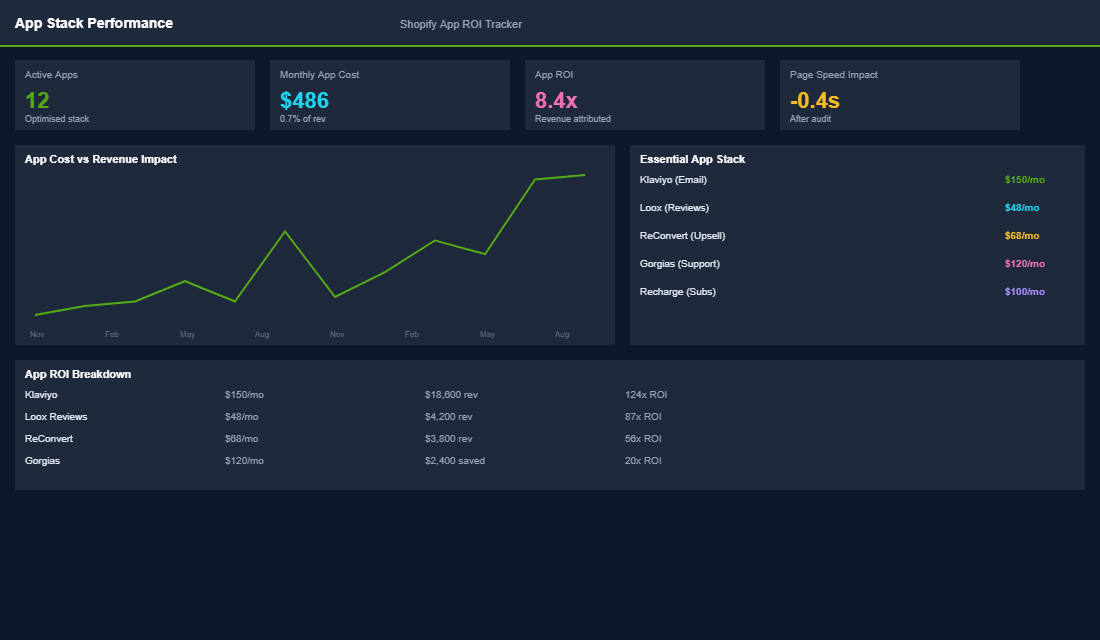
For Shopify, the leading referral platforms are ReferralCandy, Smile.io (which combines referrals with loyalty), and Friendbuy. Each integrates directly with Shopify and handles the tracking, unique links, reward fulfilment, and analytics.
The critical setup decisions:
- Sharing mechanism. Give customers three ways to share: a unique link (for social media and messaging), an email invitation (for older demographics), and a unique discount code (for offline sharing). The link should be short and memorable – not a 40-character URL with tracking parameters.
- Attribution window. Set a 30-90 day attribution window. If a referred friend clicks the link but does not purchase for 45 days, the referrer should still get credit. Longer windows capture the natural purchase consideration period.
- Reward delivery. Deliver rewards automatically via email. Do not make customers claim their reward through a complex process. The moment their friend’s order is confirmed, the referrer should receive a notification with their credit or discount code ready to use.
- Fraud prevention. Prevent self-referral (same email, same address), minimum order value requirements for the friend’s purchase, and limits on how quickly rewards can be earned. Most referral apps handle this natively, but review the settings to avoid abuse.
Promoting Your Referral Program
A referral program that nobody knows about generates zero referrals. Here is how to put it in front of customers at every relevant moment:
- Post-purchase email (day 7-10). After the customer has received and enjoyed their product, send a dedicated referral email. “Loving your [product]? Share the love – give your friends $20 off and you will get $20 too.” This timing captures customers at peak satisfaction.
- Packaging insert. Include a physical card with the referral offer and a QR code linking directly to their personalised referral page. Physical cards are kept longer than emails and often get shown to friends in person.
- Order confirmation page. Add a referral prompt to the Shopify thank-you page. The customer just completed a purchase and is in a positive mindset – perfect timing to ask them to share.
- Account page widget. Add a persistent referral section to the customer account page showing their unique link, referral count, and available rewards. This creates a visible dashboard that reminds them the program exists.
- Dedicated email campaigns. Twice a year, send a dedicated campaign reminding your entire customer list about the referral program. Combine it with a limited-time enhanced reward: “This week only: Give $25, Get $25 (normally $20).”
Measuring Referral Program Success
Track these metrics monthly to understand whether your referral program is healthy:
- Participation rate. What percentage of customers share their referral link? Benchmark: 8-15% of post-purchase customers should engage with the program. Below 5% means your incentive or promotion needs work.
- Conversion rate. Of friends who click a referral link, what percentage purchase? Benchmark: 10-20%. Referred traffic converts at a much higher rate than cold traffic because trust is already established.
- Cost per acquisition. Total referral reward cost divided by number of new customers acquired. This should be 40-60% lower than your paid ad CPA. If it is not, your incentive might be too generous relative to the quality of referrals.
- Referred customer LTV. Track whether referred customers have higher LTV than customers from other channels. If they do (they usually do), factor this into your willingness to invest in the program.
The Compound Effect of Referral Marketing
Referrals create a viral loop. Customer A refers Customer B. Customer B has a great experience and refers Customer C. Customer C refers Customers D and E. Each link in the chain costs you only the referral incentive – a fraction of what you would spend acquiring these customers through ads.
One eCommerce Circle member launched a “Give $15, Get $15” program and promoted it through post-purchase emails and packaging inserts. Within four months, the referral program was generating 14% of new customers at a CPA of $22 (vs. $48 for Meta Ads). Those referred customers had a 28% higher 12-month LTV than ad-acquired customers.
The best part about referral programs is they get better with time. As your customer base grows, the pool of potential referrers grows too. A program that generates 20 new customers in month one can generate 50+ by month six simply because more customers know about it and have had the positive experiences that motivate sharing.
Launch Your Program This Month
Install a referral app (ReferralCandy or Smile.io), set a “Give $15, Get $15” incentive, add the referral prompt to your post-purchase email flow, and design a simple packaging insert. That is it for launch. Refine the incentive and promotion strategy based on data over the following 90 days.
Inside the eCommerce Circle, referral programs are a key tactic in our Prospects and Patrons frameworks. We help members design programs that turn happy customers into active promoters – creating a self-reinforcing growth loop that reduces dependence on paid acquisition.
Your happiest customers are your best salespeople. Give them a reason and a mechanism to sell for you.
The Referral Benchmarks Worth Measuring Against
Most founders launch a referral program, see a handful of shares, and quietly decide it did not work. The problem is usually that they had no idea what working looks like. Here are the numbers to judge yourself against.
- Participation rate. The share of customers who share their link at least once. A healthy program sits at 8-15% of purchasers. Under 3% means your prompt is buried or your incentive is too weak to be worth the social risk.
- Referral conversion rate. Of the people who click a referral link, 12-25% should buy. That is three to five times your normal site conversion rate, because the referrer has already done the persuading for you.
- Share of total revenue. A mature program contributes 5-12% of monthly revenue. Anything above 15% is exceptional and usually means the product is genuinely remarkable, not that the incentive is generous.
- Cost per acquisition. Referred customers should cost you 40-60% less than paid. If you offer $20 off to referrer and friend on a $110 average order, your CAC is $40 against a paid CAC that is probably sitting somewhere between $65 and $110.
- Referred customer lifetime value. This is the number that matters most. Referred customers typically show 15-25% higher repeat purchase rates and stay roughly 16% longer than paid-acquired customers, because they arrived with a trusted recommendation instead of an ad.
Track all five monthly. If participation is healthy but conversion is weak, your landing experience is the problem. If conversion is strong but participation is low, your prompt placement is the problem. The benchmark tells you which lever to pull. For the full picture of what a referred customer is actually worth over time, work through our customer lifetime value guide first.
The Referral Tech Stack for Aussie Shopify Stores
You do not need to build anything custom. The tooling is mature, and picking the right tier for your stage matters more than picking the best-reviewed app.
- Under $50k a month: ReferralCandy or Shopify’s own post-purchase apps. Around $59-99 AUD a month plus commission. Fast to install, limited customisation, and completely adequate for proving the concept before you invest properly.
- $50k to $250k a month: Friendbuy or Talkable. Better control over reward logic, fraud rules and multi-step campaigns. Expect $200-500 AUD a month. This is where most Aussie stores should sit, because the extra control pays for itself in reduced reward leakage.
- Already running loyalty: Yotpo or LoyaltyLion. If you are paying for a loyalty platform, its referral module is almost certainly included. Turning it on costs nothing and keeps the customer in one points economy instead of two competing ones.
- Klaviyo for the messaging layer. Whatever platform issues the link, Klaviyo should send the prompt. Trigger it seven to fourteen days after delivery, not at the order confirmation, because nobody recommends a product they have not touched yet.
- Shopify Flow for the guardrails. Auto-flag referrals where the referrer and friend share a shipping address, and hold rewards until the referred order clears its return window. Self-referral is the single biggest source of reward leakage, and this stops it without manual review.
Whichever you choose, test the whole flow on your own phone before launch. Share a link, open it in a private window, complete a purchase, and confirm the reward fires. Roughly half the broken referral programs we look at are broken at that last step, and nobody noticed because nobody tested it end to end.
The 90-Day Referral Launch Plan
Referral programs fail from vagueness more than from bad strategy. Here is the sequence that works, with a deadline against every step.
- Days 1-14: build and test. Pick the app, set a double-sided incentive worth roughly 12-18% of your average order value, write the reward rules, and test the full loop yourself. Add the fraud guardrails before launch, not after you have paid out to forty fake friends.
- Days 15-30: seed with your best customers. Email the top 10% by lifetime value first, not your whole list. They already advocate for you informally, and their early shares give you real conversion data instead of noise.
- Days 31-60: put the prompt everywhere it belongs. Order confirmation page, the day-ten post-purchase email, the packaging insert, the account page, and a footer link. Five touchpoints, all pointing to the same landing page. Fold the prompt into your existing post-purchase email flows rather than sending yet another standalone campaign.
- Days 61-90: optimise on data, not opinion. Test one variable at a time. Reward amount, then prompt timing, then landing page copy. A 30% shift in participation from moving the prompt three days earlier is common, and you will never see it if you change three things at once.
- Day 90: decide. If referrals are under 3% of revenue and participation is under 5%, the incentive is not the issue. The product experience is not generating enough goodwill to be worth sharing, and that is a different project.
The stores that win at referral treat it as one lever inside a broader retention system rather than a standalone campaign. Pair it with a loyalty programme that goes beyond points and a deliberate customer content strategy, and the three reinforce each other. Advocacy compounds when you ask for it consistently in more than one place.
If you want help designing an incentive that actually moves your numbers rather than just discounting your best customers, let’s talk.