You are running ads, posting on social, and sending emails. But when someone asks what your brand stands for, what makes you genuinely different from the 50 other stores selling similar products. You stutter. You talk about quality, customer service, and being “passionate.” So does everyone else.
What’s in This Article
Brand storytelling is the moat that competitors cannot copy. They can match your prices, replicate your products, and outspend you on ads. But they cannot steal your story.
The brands that build deep emotional connections with their customers do not just sell products. They sell a narrative that customers want to be part of. Here is how to find and tell yours.
Why Story Matters More Than Product
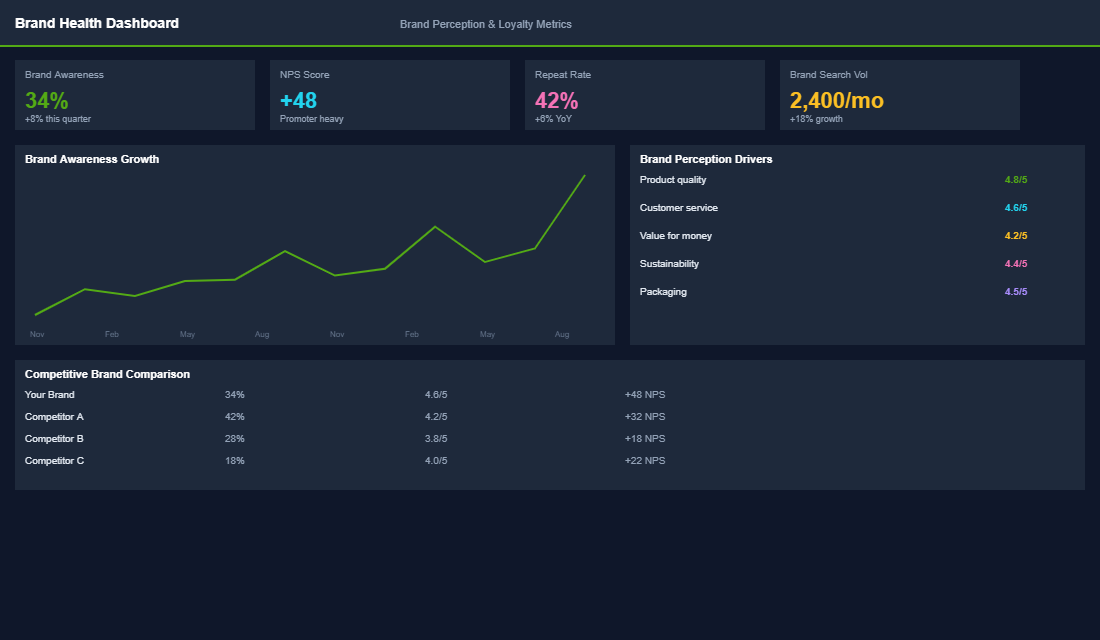
Humans are hardwired for stories. We remember narratives far better than lists of features or facts. When a customer buys from a brand with a compelling story, they are not just purchasing a product.
They are buying into a set of values, a community, and an identity. That emotional connection is what drives brand loyalty, premium pricing, and word-of-mouth advocacy.
Consider two hypothetical candle brands. Brand A: “Hand-poured soy candles with premium fragrances. Free shipping over $80.” Brand B: “After burning through a dozen toxic candles that gave me headaches, I started making my own in my garage. Three years later, our candles have replaced 40,000 chemical-laden alternatives in Australian homes.”
Same product. Completely different emotional impact. Brand B gives customers a reason to care, a problem they relate to, and a community they want to join. That story justifies premium pricing, drives organic sharing, and creates the kind of loyalty that no amount of discount codes can buy.
Finding Your Brand Story
Every brand has a story. Most just have not articulated it yet. Answer these five questions to uncover yours:
- What problem frustrated you enough to start this business? The best brand stories begin with a personal frustration that the founder experienced. You could not find a product that met your standards. You saw a gap that nobody was filling. You had a moment of clarity where you realised things could be done better. That frustration is relatable and human.
- What do you believe that others in your industry do not? Every great brand has a contrarian belief. “We believe skincare should have fewer ingredients, not more.” “We believe workwear should be as comfortable as loungewear.” “We believe sustainable packaging does not have to look boring.” Your contrarian belief is your brand’s point of view.
- Who are you really serving and why do they matter to you? Go deeper than demographics. Your customer is not “women 25-45.” Your customer is “the busy mum who gave up buying things for herself because she feels guilty spending money on ‘luxuries.'” When your story speaks to a specific person and their specific struggle, it resonates deeply.
- What is the transformation your product enables? People do not buy products. They buy better versions of themselves. What does your customer’s life look like after using your product? More confident. More organised. More comfortable. More aligned with their values. Articulate the transformation, not the transaction.
- What would be lost if your brand did not exist? This forces you to articulate your unique contribution. If the answer is “nothing, there are plenty of alternatives”, you have not differentiated enough. If the answer is “a community of 10,000 Australian women would lose the only brand that actually understands their specific need”, you have a story worth telling.
Telling Your Story Across Every Touchpoint
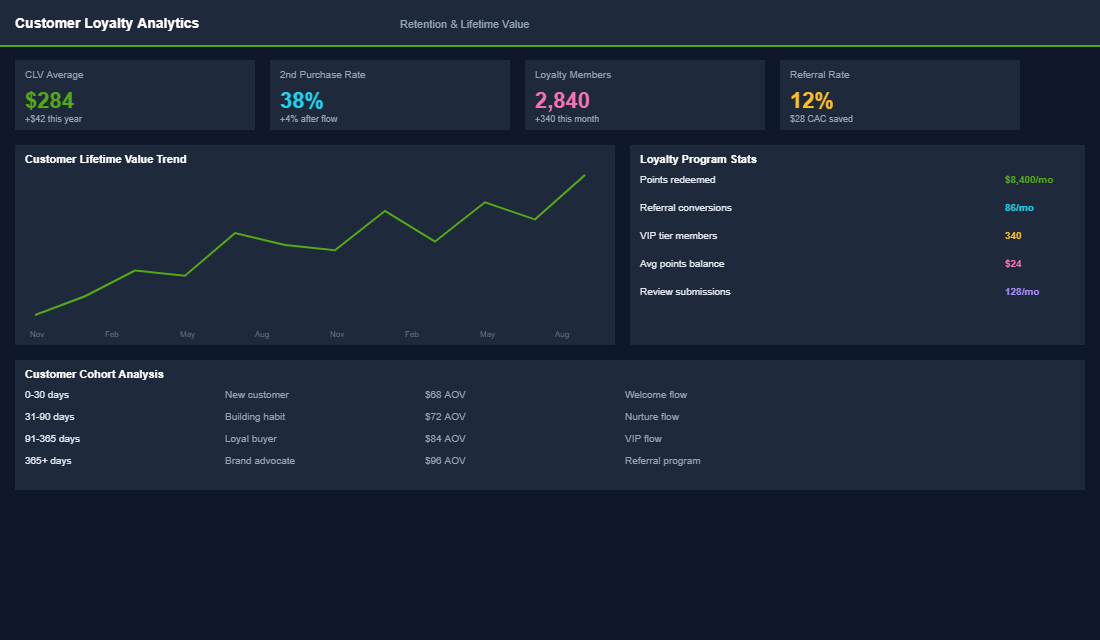
Your brand story should not live only on your “About Us” page. It should permeate every customer interaction:
Your website. Your homepage should communicate your story within the first scroll. Not “Welcome to our store”. Instead, lead with the problem you solve or the transformation you enable.
“Your skin deserves better than a 40-ingredient moisturiser.” Your About page goes deeper into the founder’s journey and brand values. But the homepage is where first impressions are made.
Product descriptions. Weave story elements into every product description. Instead of listing features, connect the product to the broader brand narrative. “We created this tee because we got tired of ‘sustainable’ basics that fell apart after five washes. We tested 14 different organic cotton blends before we found one that is as durable as it is soft.”
Email marketing. Your welcome sequence is the perfect place to tell your founding story. Email 2 in your welcome flow should be a brand story email. No selling, just connection.
Share why you started, what drives you, and what you stand for. This email typically has the highest engagement in the entire welcome sequence.
Social media. Behind-the-scenes content is storytelling in action. Show the messy, real, human side of building your brand. Packing orders at midnight, prototype failures, celebrating your first 1,000 customers. These moments build a narrative arc that followers become emotionally invested in.
Packaging. A small card inside every order telling a piece of your story (why this product matters, who made it, or how it connects to your brand mission) turns a transactional delivery into an emotional experience. This is the moment when your story becomes tangible.
Building a Brand Community
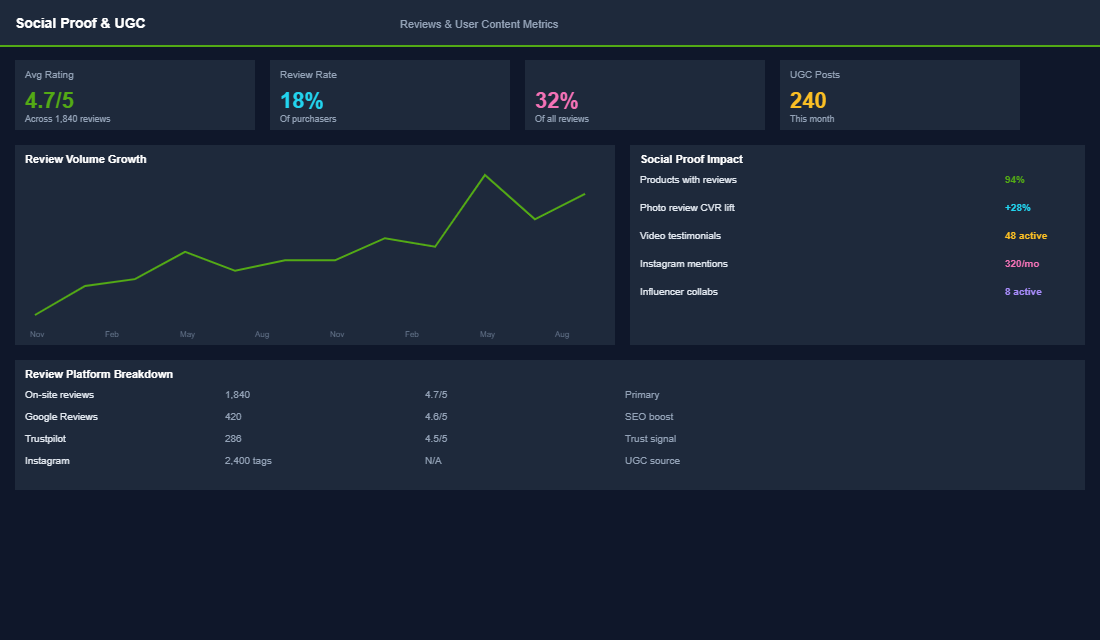
The ultimate expression of brand storytelling is community: a group of customers who identify with your brand and with each other. Community turns customers into advocates who sell your product more effectively than any ad.
- Create a branded hashtag. Encourage customers to share their experience with a hashtag you own. Repost the best content on your channels. This creates a visible community that prospective customers can see and want to join.
- Feature customer stories. Regularly spotlight customers: their stories, their transformations, their creative use of your product. This shows that your brand is bigger than you. It belongs to the community.
- Host events or experiences. Even virtual events (live Q&As, styling sessions, product development polls) create shared experiences that deepen community bonds. Physical events like pop-ups and workshops are even more powerful for local brands.
- Build an insider group. A Facebook group, membership area, or VIP email list where your most engaged customers get early access, behind-the-scenes content, and a direct line to the brand. Exclusivity deepens belonging.
The Compound Effect of Brand Story
Brand storytelling compounds in a way that performance marketing cannot. A great story gets shared, creating organic reach that costs nothing. It builds brand equity that allows premium pricing.
It creates emotional switching costs: customers who feel connected to your story do not leave for a cheaper alternative. And it attracts like-minded people who become your most passionate advocates.
One eCommerce Circle member repositioned their brand around a clear founding story and wove it through every touchpoint. Within six months, their organic social reach doubled, their email open rates increased by 18%, and (most importantly) their returning customer rate jumped from 22% to 34%. Customers were not just buying a product anymore. They were joining a story.
Products are replaceable. Stories are not. The brands that last are the ones that give people something to believe in beyond the product itself.
Measuring the Impact of Brand Storytelling
Brand storytelling can feel abstract, but its impact is measurable if you know where to look. Here are the metrics that tell you whether your story is resonating.
Email engagement on brand story content. Your welcome sequence brand story email (Email 2) should have a higher open rate and click rate than your promotional emails. Benchmark: 45-55% open rate and 3-5% click rate. If your brand story email underperforms your discount emails, the story is not compelling enough, or it is too generic to create an emotional response.
About page engagement. Check your Google Analytics (GA4) for time on page and scroll depth on your About page. A well-told brand story holds attention. Aim for an average time on page above 90 seconds and scroll depth above 60%.
If people are bouncing within 15 seconds, your story is not grabbing them. Use tools like Hotjar or Microsoft Clarity (free) to see heatmaps and session recordings of how people interact with your About page.
Social sharing and UGC. Brands with strong stories generate more organic social sharing. Track your branded hashtag volume, unprompted mentions, and the sentiment of customer reviews. When customers start referencing your brand story in their reviews (“I love that this was started by a mum who could not find safe products for her kids”), you know the story has landed.
Returning customer rate. This is the ultimate storytelling metric. Customers who connect emotionally with your brand come back at higher rates. If your returning customer rate is climbing after you invest in brand storytelling, the narrative is building loyalty. A 5-percentage-point increase in repeat rate (say from 25% to 30%) can represent a 20-30% increase in annual revenue from your existing customer base.
Avoiding the Common Brand Story Pitfalls
Not all brand stories work. The ones that fall flat usually share the same mistakes.
Making it about you, not the customer. Your founding story matters, but only because it connects to a problem your customer cares about. “I spent 2 years perfecting this formula” is about you. “Your skin was never designed to absorb 40 chemicals every morning.
That is the problem we set out to fix” is about them. The best brand stories use the founder journey as a bridge to the customer’s world, not a destination in itself.
Being vague about your values. “We care about quality” is meaningless. Every brand says that. Specific, demonstrable values create connection.
“We reject 30% of our supplier fabric because it does not meet our weight and softness threshold” is a value you can prove. Specificity creates credibility, and credibility creates trust.
Telling the story once and forgetting it. Your brand story is not a one-time About page exercise. It should evolve as your brand grows. New chapters (hitting milestones, launching new products, expanding into new markets) keep the narrative fresh and give existing customers new reasons to engage.
Post quarterly brand updates on social media and in your email newsletter. Treat your brand like a series, not a single episode.
Copying someone else’s voice. It is tempting to model your brand story after a brand you admire. The cheeky tone of Frank Body, the minimalist gravitas of Aesop, the irreverent humour of Who Gives A Crap. But borrowed voices sound hollow.
Your story needs to sound like you: the actual person behind the brand. Customers can detect inauthenticity instantly, and it destroys trust faster than any bad product experience.
Write in your own voice, even if it feels unpolished. Authenticity always beats perfection.
Brand Story Tools and Resources
You do not need to hire a branding agency to build a compelling story, but a few tools can help you refine and distribute it effectively.
For writing your story: Use the StoryBrand framework by Donald Miller as a starting structure. It positions your customer as the hero and your brand as the guide. The book is a quick read, and the framework translates directly to ecommerce. Canva’s brand kit feature helps you maintain visual consistency as you tell your story across channels.
For distributing your story: Your Klaviyo welcome sequence is the single highest-impact placement for your brand story. Social platforms like Instagram Stories and TikTok are ideal for behind-the-scenes narrative content. For your product pages, weave micro-stories into your descriptions, because strong product page copy that connects to your brand narrative converts significantly better than feature-only descriptions.
Worked Example: Rebuilding One Product Page Around Your Story
Theory is easy. Here is what the change looks like on a real page. Imagine you run a small skincare brand out of Byron Bay, and your hero product is a $58 facial oil. The current description reads: “Our facial oil is made with 100% natural ingredients including rosehip, jojoba and vitamin E. Suitable for all skin types. 30ml.”
Nothing in that paragraph is wrong. Nothing in it is yours either. Every competitor on page one of Google could publish the same words tomorrow. Now rewrite it around the founding story and the customer, not the ingredient list:
- Open with the problem: “I spent three years reacting to products that promised gentle and delivered a rash.”
- State the belief: “So we made an oil with five ingredients, not forty, and we list every one on the front of the bottle.”
- Show the proof: “Each batch is made in 200-bottle runs in our Byron workshop and tested before it ships.”
- Land the transformation: “Two drops at night. Calm skin by morning. No guessing what you just put on your face.”
- Keep the specs below the fold: ingredients, size and directions still belong on the page, just not as the opening line.
Then measure it. Run the new description against the old one for four weeks using a split-testing app, or at minimum compare the four weeks before and after. On story-led rewrites like this we typically look for a 10 to 25% lift in add-to-cart rate on the product page, and a small lift in average order value when the story naturally points to a companion product. If the number does not move, the story is still too generic. Go back to question two and sharpen the belief.
The same logic applies to your About page. Our About page playbook breaks down the structure that turns it from a biography into a sales page.
The 30-Day Story Rollout Plan
Most founders write the story, publish it on the About page, and stop. The story only compounds when it shows up everywhere a customer meets you. Roll it out in this order over one month:
- Week 1: homepage and About page. Lead the homepage with the problem you solve. Aim for About page scroll depth above 60% in GA4 within a fortnight.
- Week 2: welcome flow. Rewrite Email 2 as the founder story, no discount. Our welcome email flow playbook shows where it sits in the sequence. Target a click rate of 3 to 5%.
- Week 3: top five product pages. Apply the rewrite above to the products that drive 80% of revenue first.
- Week 4: packaging and post-purchase. A printed insert that tells one chapter of the story costs around 20 to 40 cents per order. The packaging playbook covers what to print and how to track it.
At the end of the month, check your returning customer rate against the prior 90 days. Story work is slow to show up in revenue, but when repeat rate starts creeping up, you will know the narrative is doing its job. If you want to build a community around it next, the brand community playbook is the natural follow-on.
Write Your Story This Week
Sit down for one hour with the five questions above. Write your founding story in 300-500 words: raw, honest, and personal. Then identify three places to embed it: your homepage, your welcome email, and your packaging insert.
You do not need a brand agency or a professional copywriter. Authenticity resonates more than polish.
Inside the eCommerce Circle, brand strategy is the foundation of our Product pillar. We help members uncover their unique story, articulate their brand position, and weave that narrative through every customer touchpoint, because the brands with the best stories win. If you are ready to find and tell yours, let’s talk.