Returns are the part of ecommerce that nobody wants to talk about. They eat into margins, create operational headaches, and feel like a pure cost centre. For Australian Shopify stores, the average return rate sits between 8-15% depending on the product category — and for apparel, it can be as high as 20-30%. That is a significant chunk of revenue flowing backwards.
What’s in This Article
But here is what the smartest brands understand: your returns experience is one of the most powerful retention tools available to you. Customers who have a seamless, positive returns experience are 40% more likely to purchase again than those who never returned anything. A great returns process builds trust, removes purchase anxiety, and creates loyal customers.
The goal is not to eliminate returns — that is unrealistic in ecommerce. The goal is to reduce preventable returns, convert refunds into exchanges whenever possible, and turn every return interaction into a retention opportunity. Here is the complete framework.
Understanding Why Customers Return: The Data That Reduces Returns
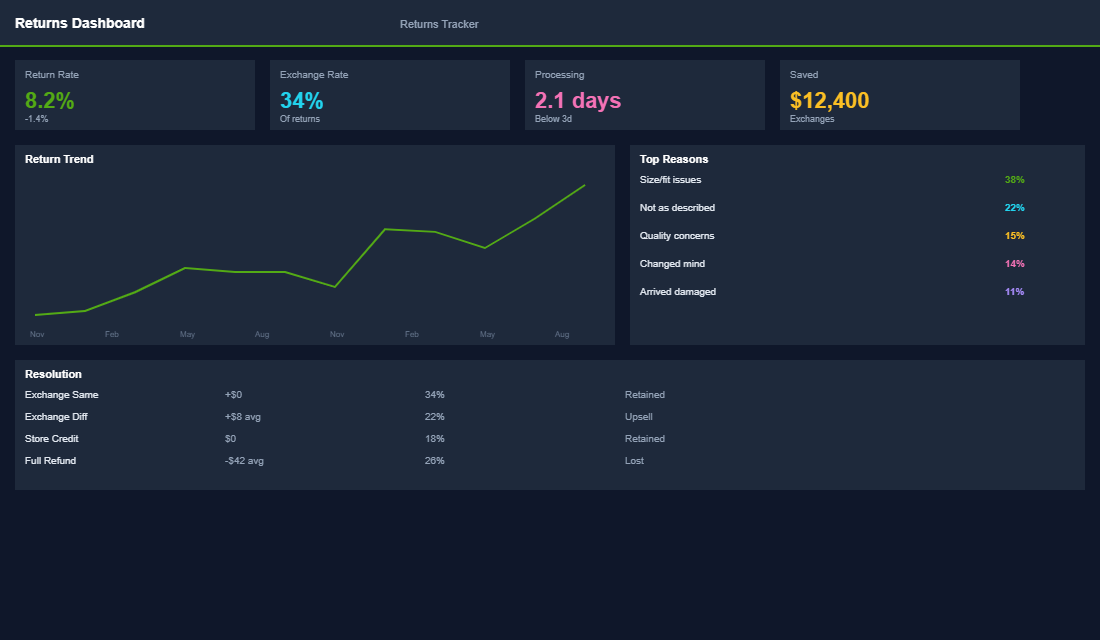
You cannot reduce returns unless you understand why they happen. The first step is tracking return reasons systematically — not just “returned” but specifically why. The most common reasons for Shopify store returns are: wrong size or fit (40-45% of returns), product not matching expectations (20-25%), change of mind (15-20%), quality issues (5-10%), and shipping damage (5-8%).
Each reason has a specific fix. Wrong size returns drop dramatically when you implement detailed size guides with actual garment measurements (not just S/M/L), customer reviews that mention fit (“I am 175cm and the Medium fits perfectly”), and a fit recommendation tool like Kiwi Sizing or True Fit.
“Not as expected” returns are a product page problem. Your photos, descriptions, and videos need to set accurate expectations. Show products on diverse body types, in different lighting, and from multiple angles. Include fabric weight, texture descriptions, and comparison references. A customer who knows exactly what they are getting rarely returns it.
Track return rates by product, not just overall. You will likely discover that 20% of your products drive 80% of your returns. Focus your improvement efforts on those high-return items first — better photos, better descriptions, better size guides, or even product improvements.
Converting Returns Into Exchanges: Retaining Revenue
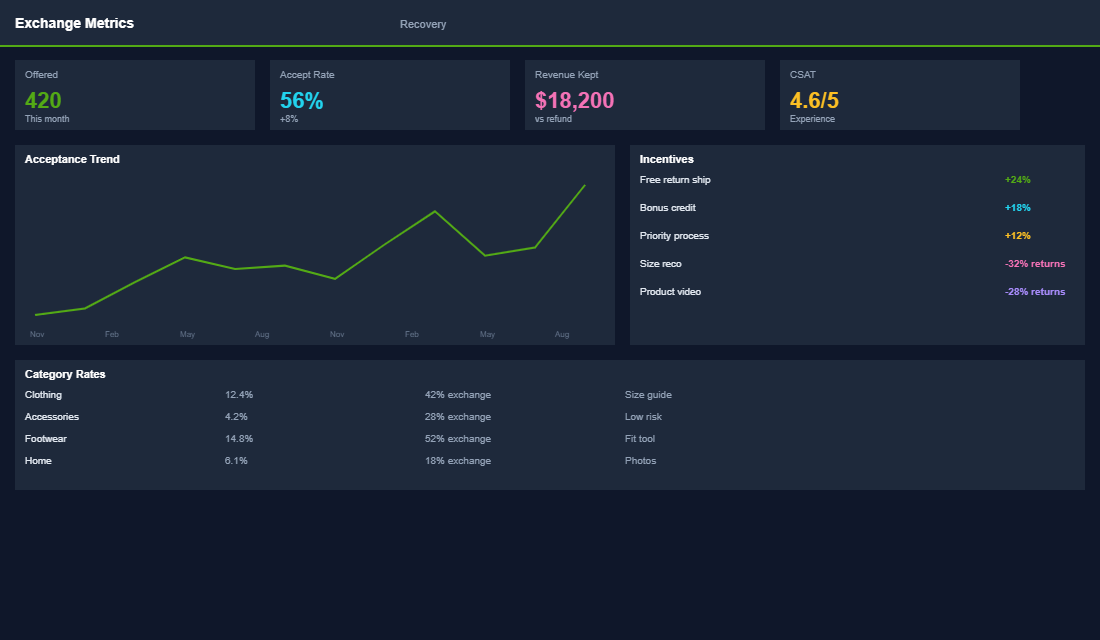
Every return that converts to an exchange retains 100% of the revenue (minus shipping costs). Yet most Shopify stores treat returns and exchanges identically — refund everything, hope the customer comes back. Smart stores make exchanges the easier, more attractive option.
The most effective tactic is offering free shipping on exchanges but charging for returns. This creates a financial incentive for customers to choose an exchange over a refund. “Exchange for free or return for a $9.95 shipping fee” nudges the majority of customers toward exchanges.
Implement instant exchanges — ship the new item immediately when the exchange is initiated, before the return arrives back. This delights customers with speed and reduces the chance they will cancel the exchange in the interim. Yes, there is a risk of not receiving the return, but the conversion value and customer satisfaction far outweigh the occasional loss.
Offer a bonus for choosing store credit over a refund. “Get 110% store credit or 100% refund” gives customers a genuine incentive to keep their money in your ecosystem. This approach retains revenue AND creates a future purchase obligation. Apps like Loop Returns and ReturnGO make this easy to implement on Shopify.
Setting Up a Professional Returns System
Manual returns processed through email are a nightmare at scale. They create inconsistent customer experiences, consume hours of customer service time, and make it impossible to track return data. You need an automated returns management system.
- Loop Returns. The gold standard for Shopify returns. Automates the entire process, incentivises exchanges over refunds, and provides detailed analytics. The exchange-first approach alone typically retains 20-30% of return revenue.
- ReturnGO. Excellent for stores that need flexible return rules and automation. Supports different policies for different product categories, customer segments, and order values.
- AfterShip Returns. Good budget option with solid automation and a clean customer-facing portal. Integrates with most Australian shipping carriers.
- Shopify native returns. Shopify now has built-in return management that handles the basics. It is free and sufficient for stores processing fewer than 50 returns per month.
Whichever tool you choose, create a branded returns portal that customers can access from your website. A professional, self-service returns experience reduces support tickets by 60-70% and makes customers feel like they are dealing with a real business, not a garage operation.
Your Returns Policy as a Conversion Tool
Your returns policy directly impacts your conversion rate. A generous, clearly communicated returns policy removes the risk from purchasing — and risk is the number one barrier for first-time online shoppers. Research shows that stores with prominent “free returns” or “easy returns” messaging see 15-20% higher conversion rates.
Display your returns policy prominently on product pages, not buried in a footer link. A simple “30-day returns, free exchanges” badge next to the Add to Cart button is one of the most effective trust elements you can add. It answers the question every online shopper is thinking: “What if it does not fit?”
Extend your returns window. 14 days is too short — it creates pressure and anxiety. 30 days is the minimum for building trust. Some brands offer 60 or even 90-day windows and find that return rates barely increase (because the urgency to return fades over time) while conversion rates improve significantly.
Post-Return Retention: Turning Returners Into Loyalists
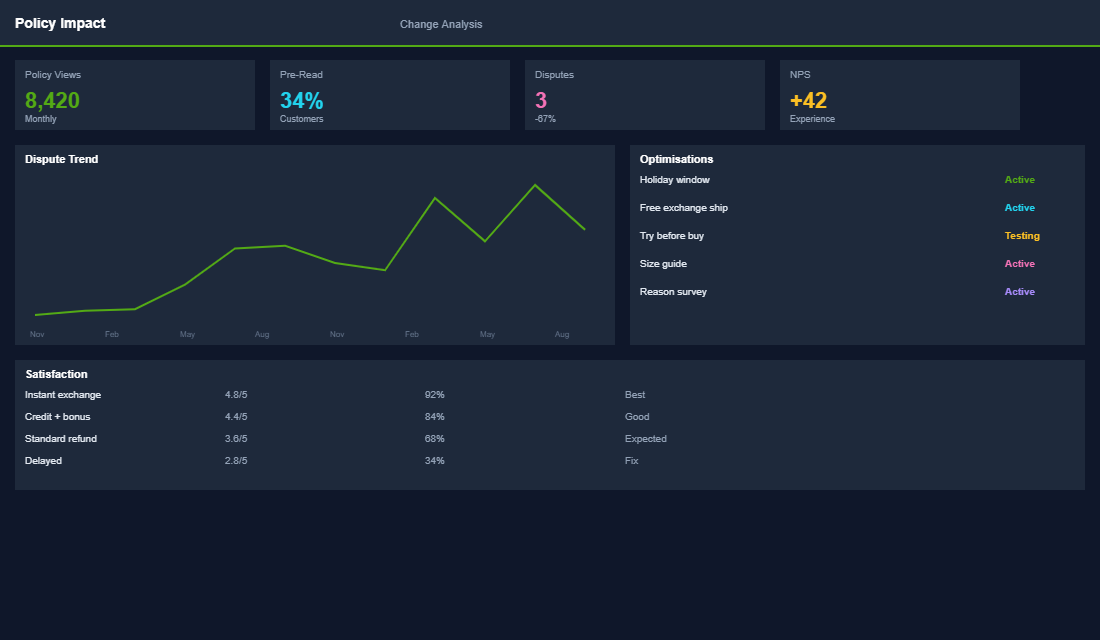
The return is not the end of the customer relationship — it is a pivot point. How you handle the post-return experience determines whether that customer ever buys from you again.
Send a personalised follow-up email 7 days after a return is processed. Thank the customer for shopping with you, ask for brief feedback on why they returned (this feeds your return reason tracking), and offer a 10% discount on their next purchase. This simple flow recovers 15-20% of returners within 30 days.
Use return data to personalise future communications. If a customer returned a size Medium and exchanged for a Large, update their profile with this sizing information. Future email recommendations should account for their known size preference. This reduces the chance of repeat returns and shows the customer that you are paying attention.
Monitor for serial returners — customers who return more than 30-40% of their purchases. A small percentage of customers abuse generous return policies, and they can significantly impact your margins. Set internal thresholds and flag accounts that exceed them for review. You do not need to ban anyone, but you should monitor the pattern.
The Compound Effect of a Great Returns Experience
When you reduce preventable returns, convert refunds to exchanges, and retain customers through the returns process, the financial impact is enormous. A store with $500K annual revenue and a 12% return rate is processing $60K in returns. Reducing that rate to 8% saves $20K. Converting 35% of remaining returns to exchanges retains another $11K. And recovering 20% of returners as repeat buyers generates an additional $8K+.
One eCommerce Circle member transformed their returns from a $4,200/month cost centre into a net-positive experience by implementing these strategies. Their return rate dropped from 14% to 8%, their exchange rate increased from 18% to 38%, and their post-return repurchase rate hit 52%. The returns process went from their biggest customer service headache to one of their strongest retention tools.
Returns and logistics optimisation is part of the operations coaching inside the eCommerce Circle. We help members build returns systems that reduce costs, retain revenue, and strengthen customer relationships. If returns are eating into your margins or your returns experience is driving customers away, we can help you fix it. Let us chat about your specific situation.