Ask most Shopify store owners who their ideal customer is and you will get something like this: “Women aged 25-45 who care about wellness.” That is not a customer avatar. That is a demographic bracket so broad it describes half the population of Sydney.
What’s in This Article
A real customer avatar is not about age and gender. It is about understanding the specific moment someone decides to open their wallet, the trigger, the hesitation, the objection they overcome right before clicking “Buy Now.” The brands pulling $40-80K months on Shopify know their buyer so well they could write their internal monologue.
If your ads are not converting, your product pages feel generic, and your email flows get ignored, the problem is almost certainly here. Your avatar is too vague, and everything downstream suffers because of it.
The Demographics Trap (And Why It Kills Your Marketing)
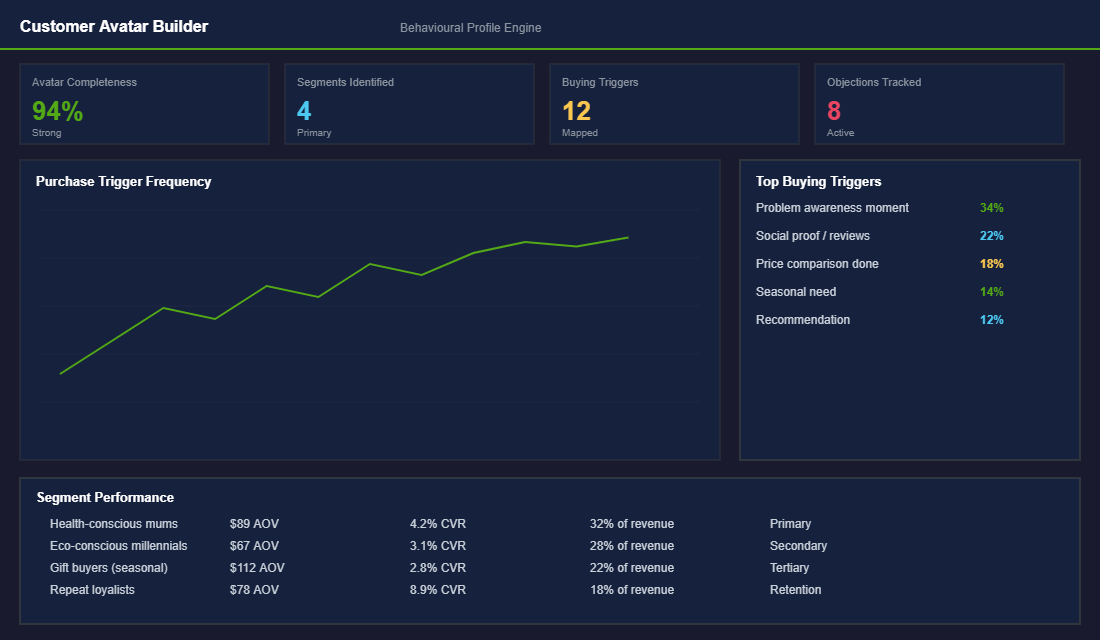
Demographics feel safe because they are easy to define. But they tell you almost nothing about why someone buys. Two women who are both 32, live in Melbourne, and earn $85K can have completely different buying motivations, objections, and price sensitivities.
What actually matters is behavioural data: what triggers their search, where they go for validation, what makes them hesitate, and what finally pushes them over the line. This is the difference between writing ad copy that gets scrolled past and copy that stops the thumb.
Inside eCommerce Circle, we see this pattern constantly. A brand will come in spending $200/day on Meta Ads with a 0.8x ROAS. We dig into their avatar work and it is three bullet points about age, location, and interests. We rebuild the avatar around buying behaviour and the same ad spend starts returning 2.5-3x within weeks. Not because the ads changed, because the messaging finally matched how the buyer actually thinks.
Build Your Avatar Around Buying Triggers, Not Demographics
A buying trigger is the specific moment or event that moves someone from “I should probably get something for this” to actively searching for a solution. For a skincare brand, it might be a breakout before a wedding. For a home organisation brand, it might be moving into a new house. For a pet supplement brand, it might be a vet visit where the dog got bad news.
You need to identify 3-5 primary buying triggers for your product. Here is how:
- Mine your reviews and support tickets. Look for phrases like “I bought this because…” or “I was looking for…” Real customers tell you exactly why they purchased if you pay attention.
- Check Reddit and Facebook groups. Search your product category and read the threads where people ask for recommendations. The language they use is your ad copy gold mine.
- Survey your existing customers. Send a simple post-purchase email: “What was happening in your life that made you look for [product]?” A 20% response rate gives you enormous insight.
- Analyse your Google Search Console data. What queries are people using to find you? The long-tail searches reveal intent and triggers better than any focus group.
Map the Objections That Kill Your Conversions
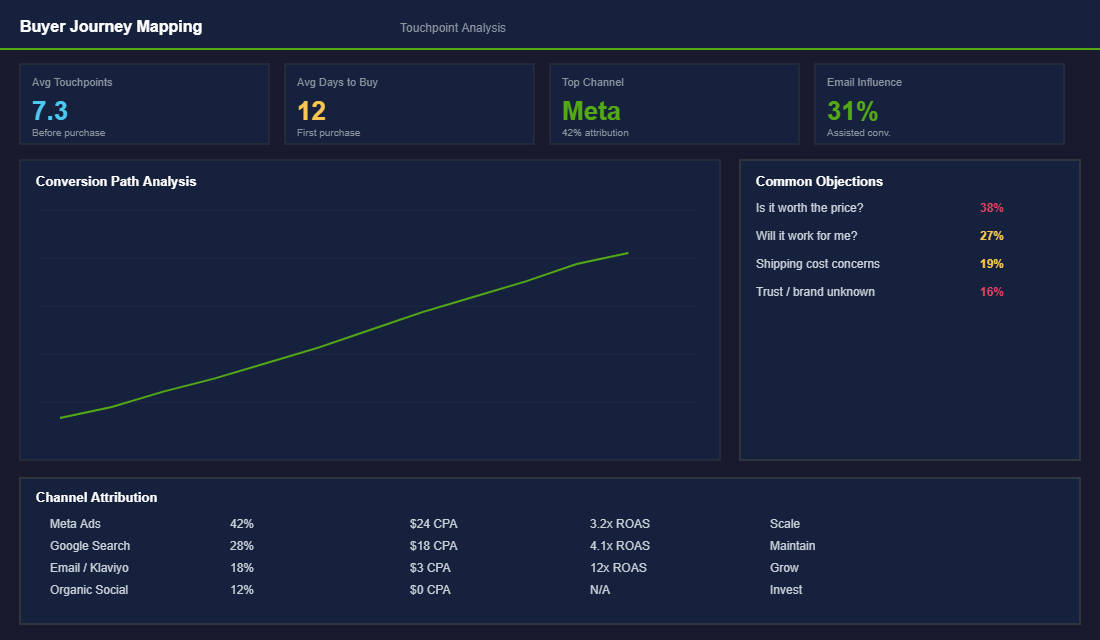
Every buyer has a mental checklist of objections they need to overcome before purchasing from a brand they have never heard of. If your product page does not address these objections proactively, you are leaving money on the table.
The most common objections for Australian ecommerce buyers are:
- “Is this worth the price?” Handle this with comparison value, cost-per-use breakdowns, and social proof showing results.
- “Will this actually work for me?” Address with specific use cases, before/after evidence, and a guarantee or trial offer.
- “Can I trust this brand?” Solve with reviews, press mentions, Australian-made badges, and a clear returns policy.
- “What about shipping?” Be upfront about costs, timeframes, and tracking. Free shipping thresholds remove this objection entirely for most buyers.
Map every objection your buyer has, then check your product page against it. If an objection is not addressed above the fold or within the first scroll, you are losing customers you already paid to acquire.
Sharpen Your Positioning So You Are Understood in Seconds
Brand positioning is not a tagline exercise. It is the answer to one question: when someone lands on your site for the first time, can they tell within 3 seconds who this is for, what it does, and why it is different?
Most Shopify stores fail this test. Their homepage says something like “Premium Quality Products” or “Shop Our Collection”, which tells the visitor absolutely nothing. Compare that to “Australian-made gut health supplements for women over 40 who are tired of bloating.” That is positioning. It repels the wrong people and magnetically attracts the right ones.
Your positioning statement should pass the “Would my dream customer screenshot this?” test. If someone in your target audience saw your homepage headline on Instagram, would they tag a friend and say “this is literally us”? If not, it is too generic.
Revisit and Refine Quarterly (Your Market Moves Fast)
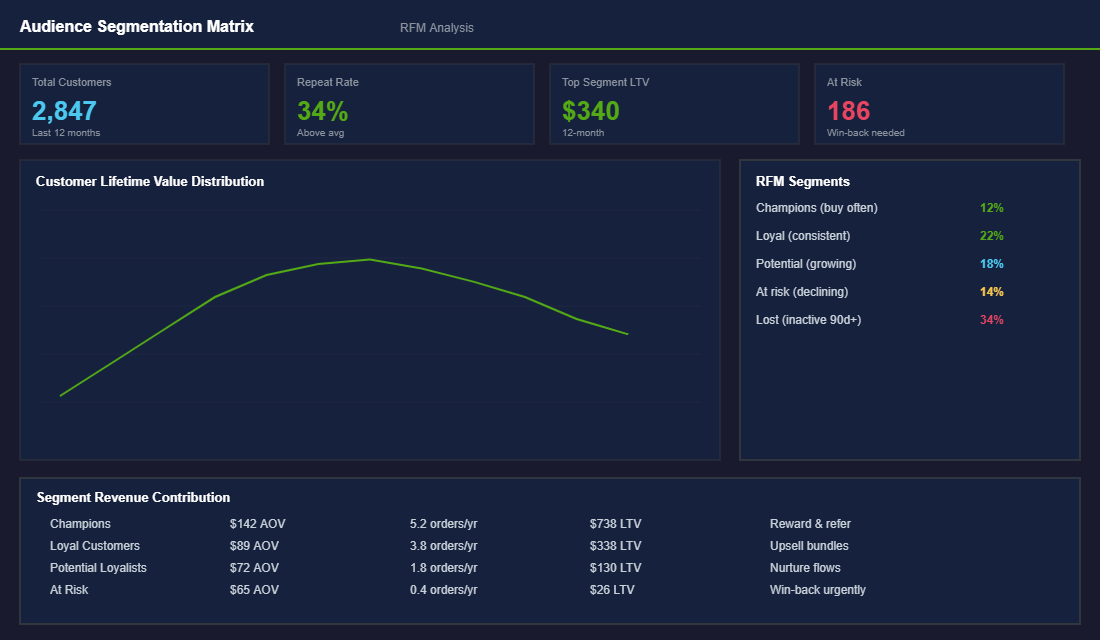
Your customer avatar is not a set-and-forget document. Markets shift, new competitors emerge, and your existing customers evolve. The brands that stay ahead revisit their avatar every quarter with fresh data.
Set a quarterly calendar reminder to:
- Review your top-performing ad creatives. What messaging resonated? That tells you what your audience cares about right now.
- Check for new objections in reviews, support tickets, and social comments. New competitors create new objections.
- Look at your customer data in Klaviyo or Shopify. Has your average customer profile shifted? Are you attracting a different segment than expected?
- Test your positioning against current competitors. If three new brands launched with similar messaging, yours might need sharpening.
The 5 Data Sources That Build a Revenue-Driving Avatar
Most store owners try to build their customer avatar from gut feel or a single brainstorming session. That approach gives you a fiction piece, not a business tool. The brands that nail their avatar pull from five specific data sources, and the overlap between them is where the real insights live.
1. Post-purchase surveys (the goldmine most brands ignore). Add a single question to your order confirmation page or post-purchase email: “What almost stopped you from buying today?” Tools like Fairing (formerly EnquireLabs) or KnoCommerce make this effortless on Shopify. After 200-300 responses, you will see clear patterns in the hesitations your buyers experience, and those patterns become the objections you address on every product page and in every ad.
2. Customer support tickets and live chat transcripts. Your support team hears the unfiltered voice of your customer every single day. Pull the last 90 days of tickets and categorise them. What questions keep coming up? What confuses people? What makes them angry? A skincare brand we worked with discovered that 40% of their pre-purchase questions were about ingredient sourcing, a topic they had never mentioned on their product pages. Adding a two-sentence sourcing note lifted their conversion rate by 18%.
3. Review mining (yours and your competitors’). Read every one-star and five-star review on your products, and on your top three competitors’ products. One-star reviews reveal unmet expectations. Five-star reviews reveal the emotional payoff your buyers are actually seeking. Tools like Yotpo or Judge.me let you export and filter reviews by rating. The language your customers use in reviews is the exact language your ads and product pages should use. If your customers say “finally found something that works for my sensitive skin,” your ad headline should echo that, not “premium organic skincare formulation.”
4. Google Analytics 4 and Shopify audience reports. Look beyond the surface demographics. GA4’s audience insights show you which acquisition channels your best customers come from, what content they engaged with before purchasing, and how long their consideration window is. If your GA4 reports show that your highest-LTV customers discovered you through blog content and took 14 days to convert, that tells you something critical about their buying process, they are researchers, not impulse buyers. Your entire funnel should reflect that.
5. Social listening and competitor ad libraries. Check Meta Ad Library to see what your competitors are running. The ads they keep active for months are the ones converting, study the messaging angles, the hooks, and the audience they are targeting. Combine this with monitoring relevant Facebook groups, Reddit threads, and TikTok comments in your niche. You will find raw, unfiltered language about the problems your product solves and the alternatives your buyers have considered.
The key is triangulation. When you hear the same objection in post-purchase surveys, support tickets, and competitor reviews, you know it is real. Build your avatar around these validated insights and you will have a document that actually drives revenue, not a persona poster that collects dust.
From Avatar to Action: The 30-Day Implementation Sprint
Knowing your customer is only valuable if you act on it. Here is a practical 30-day plan to rebuild your avatar and deploy it across your store.
Week 1: Gather data. Set up a post-purchase survey (Fairing or KnoCommerce). Export your last 90 days of support tickets. Pull your GA4 audience insights and Shopify customer reports. Collect 50+ reviews from your store and your top 3 competitors. By the end of this week, you should have raw data from all five sources sitting in a spreadsheet.
Week 2: Identify patterns. Look for the themes that appear across multiple data sources. Group buying triggers into 3-4 categories. List the top 5-7 objections by frequency. Document the exact language your customers use, not your marketing team’s version of it. Draft your updated avatar document with these sections: primary buying trigger, secondary triggers, top objections (with counter-arguments), decision timeline, and competitor alternatives they considered.
Week 3: Deploy to your highest-impact touchpoints. Rewrite your top 5 product page headlines and descriptions to address the primary buying trigger and top objection. Update your Klaviyo welcome flow to speak to the emotional need behind the purchase. Adjust your Meta Ads primary text to lead with the language your customers actually use.
Week 4: Measure and refine. Compare your conversion rate, email open rates, and ad CTR against the previous 30 days. The stores we work with typically see a 15-25% lift in conversion rate within the first month of deploying avatar-driven copy. If a specific touchpoint did not improve, revisit the messaging, the data will tell you where the disconnect is.
The Compound Effect: When Your Avatar Powers Everything
When your customer avatar is dialled in, everything downstream clicks into place. Your Meta Ads creative speaks directly to buying triggers, so CTR goes up and CPA comes down. Your product pages address objections before the buyer even thinks of them, so conversion rates climb. Your email flows hit the right emotional notes at the right moments, so revenue per recipient doubles.
This is not theory. We see it repeatedly with eCommerce Circle members. One skincare brand went from 1.2x ROAS to 3.8x ROAS in six weeks just by rebuilding their avatar and rewriting their ad copy and product pages to match. Same products, same prices, same ad budget. The only thing that changed was how well they understood their buyer.
Stop Guessing Who Your Customer Is
Your customer avatar is the foundation that every other part of your ecommerce business sits on. Get it right and your ads convert, your emails resonate, and your product pages close. Get it wrong and you are throwing money at a wall hoping something sticks.
Inside the eCommerce Circle, Prospects is the second pillar of the More Orders Operating System, and for good reason. Everything you build in your store is only as strong as your understanding of who you are selling to. We work with Shopify brands every day to build avatars that translate directly into higher conversion rates and lower acquisition costs.
Turn Your Avatar Into Klaviyo Segments That Actually Sell
An avatar that lives in a Google Doc changes nothing. The brands that win turn it into living segments inside their email and ads platform, then speak to each one differently. Here is how to make your avatar earn its keep.
- Trigger-based segments in Klaviyo. Build segments around the buying triggers you identified, not age brackets. A gifting buyer behaves nothing like a self-purchase repeat buyer, and sending them the same email leaves money on the table. Segmented campaigns earn roughly 30 to 50% more revenue per send than batch-and-blast.
- Mirror the language back. Use the exact words customers gave you in surveys and reviews as subject lines and ad hooks. When the message matches the trigger, click-through often lifts 20 to 40%.
- Feed it into Meta. Upload your highest-LTV segment as a seed for a lookalike audience. Founders who target a 1% lookalike off their best 90-day cohort, rather than a broad audience, routinely cut cost per acquisition by 15 to 25%.
Start with three segments, not thirty. A new buyer, a repeat buyer, and a lapsed buyer is enough to prove the avatar works before you build out the full map. Klaviyo, Shopify’s native customer segments, and a post-purchase survey tool like Fairing give you everything you need. For the system that sends the right message to each one, see our guide on customer segmentation for Shopify.
If you are ready to stop guessing and start selling to a buyer you actually understand, let’s talk.