You have spent months building your email list. You are running flows, sending campaigns, and watching your subscriber count climb. But here is the uncomfortable truth: if you are sending the same emails to everyone on your list, you are leaving serious money on the table.
What’s in This Article
Most Shopify store owners treat their email list like one big audience. New subscriber? Same email. Repeat buyer who has spent $2,000? Same email. Someone who browsed once three months ago? You guessed it, same email. And then they wonder why their open rates are dropping and their unsubscribe rates are climbing.
The brands that are driving 30-40% of their revenue from email are doing something fundamentally different. They are segmenting their lists and sending the right message to the right person at the right time. And the results speak for themselves, segmented campaigns can drive up to 760% more revenue than generic blasts.
Why Most Shopify Stores Get Segmentation Wrong
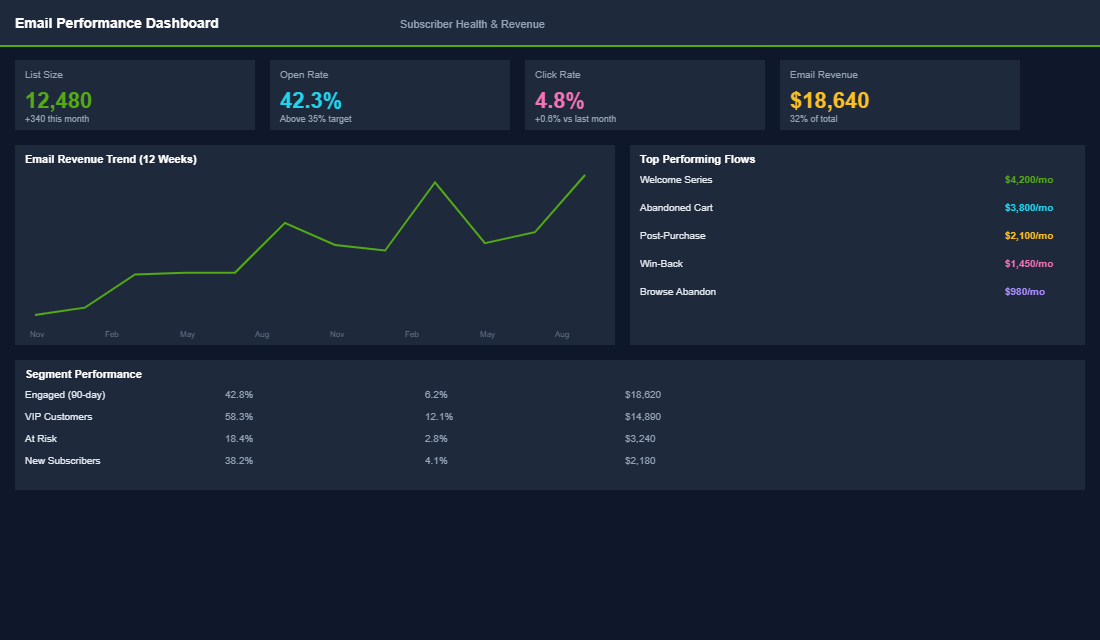
The biggest mistake is overcomplicating it. Store owners read about advanced segmentation and think they need 47 different segments with complex conditional logic. That is a recipe for analysis paralysis and emails that never get sent.
The second mistake is ignoring it entirely. Klaviyo and Omnisend both give you powerful segmentation tools out of the box, but most store owners never touch them beyond the default segments. They are paying for a Ferrari and driving it like a shopping trolley.
Smart segmentation starts with just 4-5 core segments. Get those right, and you will see an immediate lift in engagement and revenue. You can always add complexity later once you see what is working.
The 5 Core Segments Every Shopify Store Needs
These are the segments that move the needle for 90% of ecommerce brands. Build these first, and you will have a foundation that drives real results.
1. Engaged Subscribers (Opened or Clicked in Last 90 Days)
This is your bread-and-butter segment. These people are actively paying attention to your emails. They should receive your best offers, new product launches, and campaign emails first. In Klaviyo, create this segment with: “Has opened email at least once in the last 90 days OR has clicked email at least once in the last 90 days.”
Why 90 days? Because email engagement decays fast. Someone who opened an email six months ago is fundamentally different from someone who clicked yesterday. Targeting your engaged segment keeps your sender reputation strong and your deliverability high.
2. VIP Customers (Top 10% by Spend)
Your VIP segment typically accounts for 30-50% of your total revenue. These customers deserve special treatment, early access to sales, exclusive products, loyalty rewards, and personal touches that make them feel valued. In most Shopify stores, the top 10% of customers spend 3-5x more than the average buyer.
Set this up in Klaviyo using: “Has placed order, total value of all orders is greater than [your threshold].” For most stores doing $50K-$200K per month, a VIP threshold of $500-$1,000 AUD in total spend works well. If you want to go a level deeper than a simple spend threshold, our RFM segmentation playbook shows you how to score every customer on recency, frequency and monetary value.
3. At-Risk Customers (Purchased But No Activity in 60-120 Days)
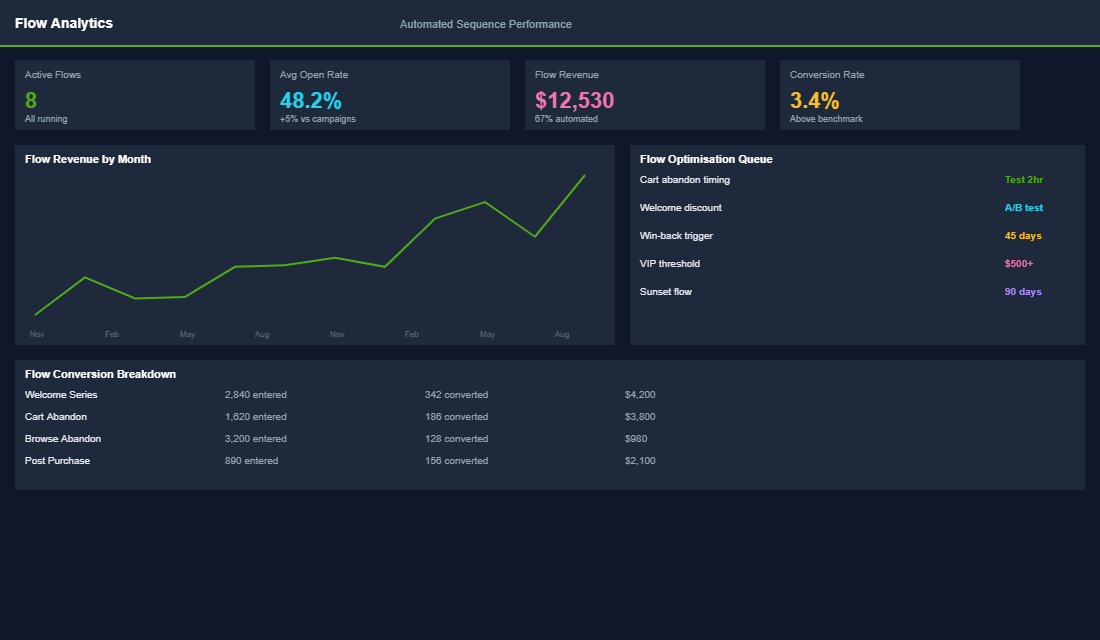
These are customers who bought from you but are going cold. They have not opened an email or visited your site in 60-120 days. This is your win-back window, the period where a well-timed email can bring them back before they forget about you entirely.
At-risk customers respond well to: product replenishment reminders, “we miss you” campaigns with a small incentive, new product announcements relevant to their past purchases, and social proof showing what other customers are buying.
4. Browse Abandoners (Viewed Products But Never Purchased)
This segment is gold for Shopify stores with decent traffic. These people have shown intent, they looked at specific products, but never pulled the trigger. A targeted browse abandonment campaign can convert 2-4% of these window shoppers into buyers.
The key is timing and relevance. Send a browse abandonment email within 2-4 hours of the browse session, featuring the exact products they viewed plus 2-3 similar items. Include social proof (reviews, ratings) and address common objections for that product category.
5. New Subscribers (Joined in Last 30 Days, No Purchase)
Fresh subscribers are in discovery mode. They are interested enough to give you their email but have not bought yet. This segment needs a different approach, education, brand story, social proof, and a compelling first-purchase offer. Your welcome email flow should do the heavy lifting here, but segmenting new subscribers separately lets you also include them in your best-performing campaigns.
Advanced Segmentation Strategies That Drive Revenue
Once your core segments are performing, layer in these advanced strategies to squeeze more revenue from your list.
Purchase frequency segmentation. Separate one-time buyers from repeat buyers. Repeat buyers have already overcome the trust barrier, they respond to new products, bundles, and upsells. One-time buyers need more nurturing with reviews, guarantees, and lower-risk offers to get that second purchase.
Average order value tiers. Customers who spend $30 per order behave differently from those spending $150. Tailor your product recommendations and offers accordingly. Higher AOV customers respond well to premium bundles and exclusive collections. Lower AOV customers respond to multi-buy discounts and free shipping thresholds.
Product category interest. If you sell across multiple categories (e.g., skincare and haircare), segment by purchase or browse history. Someone who only buys haircare does not want skincare promotions every week. This single change can boost click rates by 20-30%.
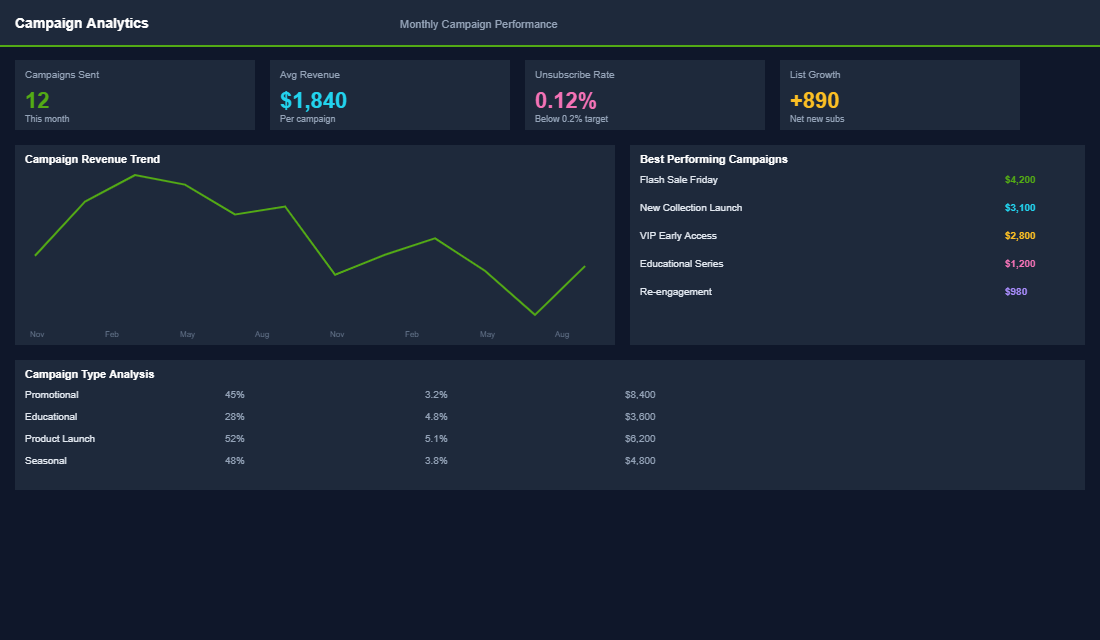
Geographic segmentation. For Australian stores shipping domestically, segment by state for location-specific promotions, shipping estimates, or event tie-ins. If you also ship internationally, create separate segments for domestic and international customers, their shipping costs, delivery times, and even seasonal needs are different.
Setting Up Segments in Klaviyo: Step by Step
Klaviyo makes segmentation relatively painless once you know the logic. Here is how to build your engaged subscriber segment as an example, the same principles apply to all segments.
- Navigate to Lists & Segments. Click “Create List / Segment” and choose “Segment.”
- Name it clearly. Use a naming convention like “Engaged – 90 Day – Opens & Clicks” so you can find it quickly.
- Set your conditions. Choose “What someone has done” > “Opened Email” > “at least once” > “in the last 90 days.” Then add an OR condition for “Clicked Email” with the same parameters.
- Review and create. Klaviyo will show you an estimated segment size. For a healthy list, your 90-day engaged segment should be 25-40% of your total list.
If your engaged segment is below 20%, your content needs work. If it is above 50%, you can tighten the window to 60 days for even more targeted campaigns.
How Segments Work Together as a System
The real power of segmentation is not in individual segments, it is in how they work together. Think of it as a customer lifecycle engine. New subscribers enter through your welcome sequence. Those who engage move into your active segment. Active subscribers who purchase become customers. Customers who spend above your threshold become VIPs. And anyone who goes quiet enters your at-risk segment for win-back campaigns.
Each segment gets different messaging, different frequency, and different offers. Your VIPs might get 3-4 emails per week and love it. Your at-risk customers might get one carefully crafted email per fortnight. This approach respects your subscribers and keeps them engaged instead of driving them to unsubscribe.
When all five core segments are running with tailored content, most Shopify stores see a 15-25% increase in email revenue within the first 60 days. That is not a minor improvement, on a store doing $100K per month, that is an extra $15K-$25K driven purely by sending smarter emails to the same list.
The Sixth Segment Nobody Builds: Your Sunset Segment
Here is the segment most Shopify founders skip, and it quietly costs them deliverability every single week. Your sunset segment is everyone who has not opened or clicked an email in 180 days or more. Keeping these people on your active send list does real damage.
Since Gmail and Yahoo tightened their bulk sender rules in 2024, the maths got brutal. You need to keep your spam complaint rate under 0.3%, and ideally under 0.1%. Every email you send to a dead address drags your engagement rate down, and mailbox providers use that engagement to decide whether your next campaign lands in the inbox or the junk folder.
The fix is a two-step sunset flow. First, send a short re-engagement series, two or three emails over two weeks, with a clear “do you still want to hear from us?” message and your single best offer. Anyone who clicks gets moved back into your engaged segment. Anyone who does not gets suppressed. Yes, suppressed. Your list shrinks and your revenue per email goes up, because Klaviyo charges you by profile count and mailbox providers reward clean lists.
While you are cleaning up your sender reputation, make sure your technical foundation is solid too. Our email authentication playbook walks through the DMARC, SPF and DKIM setup that keeps your domain off the blocklists.
How to Measure Whether Your Segments Are Actually Working
Open rates stopped being a reliable signal when Apple released Mail Privacy Protection, which auto-opens emails for a large slice of your list. The metric that matters now is revenue per recipient (RPR). It cuts through every vanity number because it answers one question: how much money did each send actually make?
Here are the benchmarks we use with eCommerce Circle members. A generic blast to your full list typically earns $0.05 to $0.10 per recipient. A well-targeted segmented campaign should earn $0.15 to $0.40 per recipient. Your VIP segment should be the outlier, often $1.00 or more per recipient on a strong offer.
Two more numbers worth tracking monthly. First, your flow-to-campaign revenue split: healthy Shopify stores see roughly 30-40% of email revenue from automated flows and the rest from campaigns. If flows are under 20%, your automation is underbuilt. Second, click rate by segment: your engaged segment should click at 1.5-2.5% or better. If your engaged segment clicks like a cold list, your content is the problem, not your targeting.
And put these reviews in your calendar before the peak season rush. If you tighten your segments in September, you walk into Click Frenzy and BFCM with a clean list, strong deliverability, and segments that are primed to buy. That is when segmentation pays for itself ten times over.
How Often to Email Each Segment (The Cadence Cheat Sheet)
Building the segments is half the job. The other half is matching send frequency to engagement level — because the fastest way to torch your sender reputation is treating your sunset segment like your VIPs.
- Engaged subscribers: 2 to 4 campaigns a week is sustainable. These people opted in and keep opening — under-mailing them leaves revenue on the table. Watch revenue per recipient, not just open rate.
- VIPs: 1 to 2 sends a week, but make them feel different. Early access, founder notes, genuine previews. VIPs typically generate 3 to 5x the revenue per email of your average subscriber, so quality beats volume here.
- At-risk customers: 1 a week maximum, value-led not discount-led. If 60 days of gentle touches fail, they flow into your win-back sequence — we map that exact 3-email structure in the Shopify Win-Back Flow.
- Browse abandoners: triggered flows only, capped at 2 to 3 emails per browse session. Campaign-blasting this segment feels like surveillance.
- New subscribers: let the welcome flow do the work for 30 days before they join general sends. A properly built welcome sequence converts 5 to 10% of subscribers on its own.
- Sunset segment: one re-permission email a month for 90 days, then suppress. Mailing dead addresses drags your deliverability down for everyone else.
Two numbers tell you whether the cadence is right. Deliverability first: keep your spam complaint rate under 0.08% and your bounce rate under 2%, or Gmail and Outlook start quietly filtering you. Revenue second: a healthy segmented account in Australia should see email driving 25 to 35% of total store revenue, with flows contributing roughly half of that. If your list is growing but email revenue is flat, your problem is usually capture quality, not send volume — fix the front door with the Email Pop-Up Playbook before adding more campaigns.
Stop Blasting, Start Segmenting
Email segmentation is not optional anymore. With inbox competition fiercer than ever and email providers getting stricter about engagement signals, the spray-and-pray approach is a fast track to the spam folder. But the good news is that you do not need a complicated setup. Start with the five core segments, send tailored content to each, and measure the results over 30 days.
Inside eCommerce Circle, email segmentation is one of the first things we work on with every member, because it is one of the fastest ways to find revenue that is already sitting in your business. If you want a second set of eyes on your segments, your flows, or your whole email engine, let’s talk.