You have spent months building your brand, perfecting your product, and growing your customer base. Then one morning you wake up to find a competitor selling a near-identical product at half the price, using your product photos, and targeting your audience with ads. Or worse — a customer has filed a chargeback on a $400 order and you have no documentation to dispute it.
What’s in This Article
Risk management is the unsexy side of ecommerce that nobody talks about — until something goes wrong. The brands that survive and thrive long-term are the ones that build protection into their business before they need it. Here is what you should be doing right now.
Intellectual Property: Protecting What You Have Built
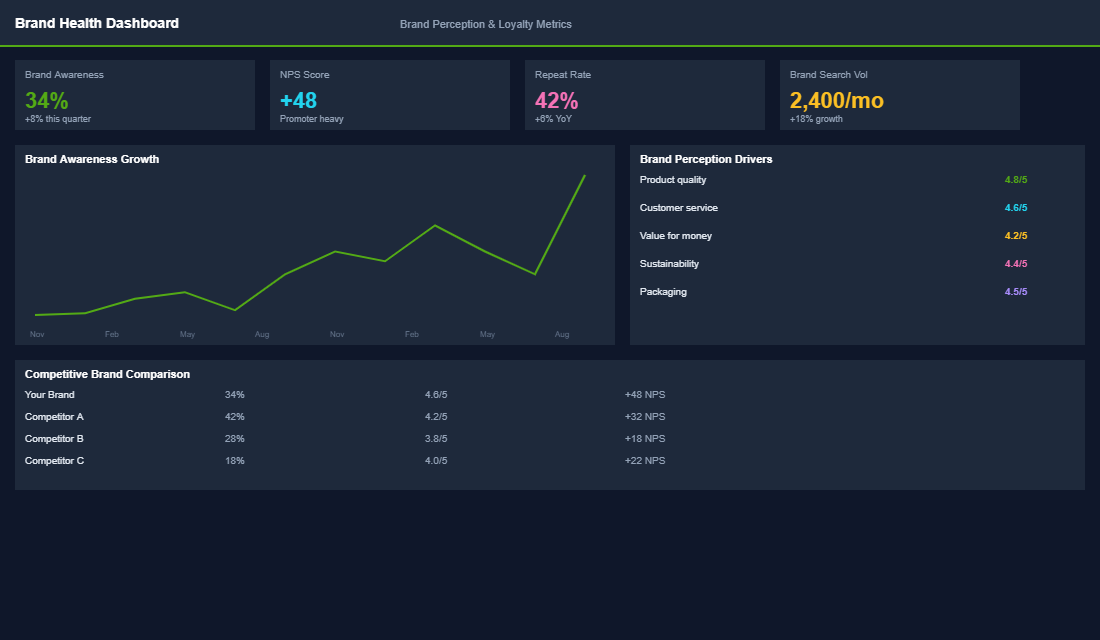
Your brand is one of your most valuable assets, and it is shockingly easy for someone to steal it if you have not taken basic IP protection steps.
Register your trademark. In Australia, trademark registration through IP Australia costs around $250 per class and takes 7-8 months. Register your brand name and logo at minimum. Without a registered trademark, you have very limited legal recourse if someone copies your brand. If you are selling internationally, consider registering in each major market — at minimum the US (via the USPTO) and the EU.
Protect your product designs. If you have original product designs, consider a registered design through IP Australia ($250 per design). This protects the visual appearance of your product for up to 10 years. For truly novel products, a patent may be appropriate — though patents are significantly more expensive ($5,000-15,000+) and only worth pursuing if the product is genuinely unique.
Copyright your content. Your product photography, website copy, and marketing materials are automatically protected by copyright in Australia. But proving ownership can be difficult if someone copies them. Watermark original photos, keep raw files with metadata, and document your creative process. If someone steals your photos for use on a competitor site or marketplace listing, you can file a DMCA takedown or contact the platform directly.
Fraud Prevention: Stopping Chargebacks Before They Start
Chargebacks are the silent profit killer for Shopify stores. Every chargeback costs you the sale amount plus a $15-25 processing fee — and if your chargeback rate exceeds 1%, Shopify Payments can suspend your account entirely.
- Use Shopify’s fraud analysis. Every order in Shopify gets a fraud risk score. High-risk orders (mismatched billing/shipping addresses, multiple failed payment attempts, orders from fraud-prone regions) should be manually reviewed before fulfilment. It is better to cancel a suspicious order than to ship it and eat a $400 chargeback.
- Require CVV and AVS matching. In Shopify Payments settings, enable Address Verification System (AVS) and CVV checks. These add friction for legitimate customers (minimal) but dramatically reduce fraudulent transactions.
- Document everything. Keep shipping confirmation emails, tracking numbers, delivery signatures, and customer communications. When a chargeback dispute arrives, your evidence package determines whether you win or lose. Brands that document thoroughly win 60-70% of disputes. Brands that do not win less than 20%.
- Install a fraud prevention app. For stores doing $50K+ per month, apps like NoFraud or Signifyd provide real-time fraud screening and chargeback guarantees. They cost 0.5-1% of revenue but can save you multiples of that in prevented fraud.
Insurance: What You Actually Need
Most small Shopify stores operate without any business insurance. That is fine until a customer has an allergic reaction to your skincare product, slips on your packaging, or claims your product caused property damage. One product liability claim can bankrupt an uninsured small business.
Here are the insurance policies every serious Shopify brand should consider:
- Product liability insurance. Covers claims that your product caused injury or damage. Essential for any brand selling physical products — especially consumables, cosmetics, children’s products, or anything electrical. Expect to pay $500-2,000 per year depending on your product category and revenue.
- Public liability insurance. Covers third-party injuries or property damage related to your business. If you do markets, pop-ups, or have a physical location, this is non-negotiable. Often bundled with product liability at a small additional cost.
- Cyber liability insurance. Covers data breaches, cyber attacks, and customer data theft. If your Shopify store stores customer data (which it does), a data breach can result in significant legal costs and regulatory fines. Cyber insurance is increasingly affordable at $300-800 per year for small ecommerce businesses.
- Business interruption insurance. Covers lost income if your business is disrupted by events outside your control — supply chain failures, platform outages, or natural disasters. This is a newer category for ecommerce and not all insurers offer it, but it is worth investigating if your business is your primary income.
Data Security and Privacy Compliance
Australia’s Privacy Act applies to businesses with annual turnover above $3 million, but the proposed reforms will extend it to all businesses. Regardless of whether you are technically required to comply today, treating customer data responsibly is good business and prepares you for the inevitable regulatory changes.
- Have a privacy policy. It must explain what data you collect, how you use it, and how customers can access or delete their data. Shopify provides a template, but customise it to reflect your actual practices. If you use Klaviyo, Meta Pixel, or Google Analytics, all of these need to be disclosed.
- Secure your accounts. Enable two-factor authentication on every account connected to your business: Shopify, email, banking, ad platforms, and social media. Use a password manager and never share login credentials via email or Slack.
- Limit data access. Only give staff access to the data they need. Your VA does not need access to your Shopify Payments settings. Your social media manager does not need access to customer financial data. Use Shopify’s staff permissions to control access levels.
- Plan for a data breach. Know what you would do if customer data was compromised. Under the Notifiable Data Breaches scheme, businesses must report eligible breaches to the OAIC and affected individuals. Having a response plan before you need it saves critical time during a crisis.
Supplier and Platform Risk
Your business depends on platforms and suppliers that you do not control. That dependency is a risk you need to actively manage:
Platform dependency. If Shopify changed their pricing, restricted your account, or experienced a major outage, what would happen to your business? Mitigate this by owning your customer data (export regularly), building an email list you can communicate through independently, and maintaining your own domain that you control regardless of platform.
Ad platform dependency. If Meta banned your ad account tomorrow (it happens), could your business survive? Diversify your acquisition channels so no single platform accounts for more than 40% of your revenue. Build organic channels (SEO, email, social) that do not depend on paid advertising.
Supplier dependency. As we covered earlier, single-source suppliers are a risk. Maintain at least one backup supplier for your hero products. Keep relationships warm with quarterly orders even if the volumes are small.
The Compound Effect of Risk Management
Risk management does not generate revenue. But it prevents the catastrophic events that wipe out months or years of revenue in a single incident. A $2,000 annual investment in insurance, IP protection, and security measures can protect millions in lifetime business value.
One eCommerce Circle member had a competitor clone their product and start running Meta Ads using their photos. Because they had a registered trademark and documented copyright, they filed successful takedown notices on both Meta and the competitor’s platform within two weeks. Without those protections, they would have had no recourse and lost an estimated $8,000/month in diverted sales.
Protection is an investment, not a cost. The brands that last are the ones that think about risk before it becomes a crisis.
Your Protection Checklist
This month, take four actions. Register your trademark if you have not already. Enable two-factor authentication on every business account. Get a product liability insurance quote. And export your Shopify customer data as a backup. These four steps take a few hours total and dramatically reduce your business risk.
Inside the eCommerce Circle, risk management and business protection is our Protection framework — one of the 10 P’s that most brands overlook until it is too late. We help members build resilient businesses that are protected against the threats that can derail years of hard work.
Build your business like you plan to run it for a decade. Because the protections you put in place today determine whether you still can.
The Specific Tools and Numbers Aussie Shopify Brands Should Know
Risk management is one of those topics that gets vague advice and expensive consequences. The brands that handle it well are not the most cautious. They are the most specific. They know which tools to install, which numbers to track, and which legal obligations actually apply to an Aussie Shopify business doing under $3m in revenue. Most founders do not.
Fraud and chargeback stack that pays for itself. Shopify’s built-in fraud analysis catches the obvious stuff. To get to the next 80%, you need a dedicated tool. Signifyd, NoFraud, and Riskified all offer chargeback guarantees, which means if a transaction they approve still ends up as fraud, they refund you. Pricing typically runs 0.5% to 1% of GMV, and the average Shopify store sees chargeback rates drop from 0.7% of orders to under 0.1% within 60 days. If your chargeback rate creeps above 1%, Stripe and PayPal will throttle you, so this is not optional once you are over $50k a month.
The Australian Privacy Act numbers most Shopify founders miss. If your annual revenue is over $3m, you fall under the Privacy Act and must comply with the Australian Privacy Principles enforced by the OAIC. Under the Notifiable Data Breaches scheme, you have to notify affected customers and the OAIC within 30 days of a breach that is likely to cause serious harm. Penalties for serious or repeated breaches are now up to $50m per breach since the 2022 amendments. Even if you are under the $3m threshold, customer trust does not care about turnover, so the standard still applies.
Insurance that actually pays out for ecommerce. A standard small business policy from BizCover, Public Liability Australia, or Vero usually covers $5m in public liability for $40 to $80 per month. Cyber liability cover, which pays for breach response and ransomware, sits at $50 to $200 per month for stores doing under $1m. Product liability is the one most Aussie Shopify founders skip and most need, especially in beauty, supplements, baby, or apparel. Tower, QBE, and CGU all write product liability for ecommerce. Check the wording for “online sales” specifically, because some standard policies exclude direct-to-consumer.
Risk discipline is not a one-time setup. It connects to your payment processing setup, your return policy and refund defences, and your shipping insurance and damage protection. Each of those plays a role in keeping margin off the floor and customer trust intact.
Inside eCommerce Circle, we run a Protection audit on every member at onboarding and again at the start of every BFCM season. If you want a second opinion on yours, let’s talk.