Black Friday Cyber Monday is the Super Bowl of ecommerce. It is the single biggest revenue opportunity of the year for most Shopify stores, and the difference between a record-breaking event and a disappointing one comes down to one thing: preparation. The brands that start planning 90 days out consistently outperform those that scramble to put something together in November.
What’s in This Article
Australian consumers spent over $6.3 billion during the 2024 BFCM period, with online sales growing 22% year-over-year. Shoppers are primed, wallets are open, and competition for attention is fierce. You cannot wing it and expect results. You need a structured plan that covers inventory, offers, creative, email sequences, ad campaigns, and website preparation.
This is the complete 90-day BFCM planning timeline that we use inside the eCommerce Circle. It breaks the preparation into manageable phases so nothing falls through the cracks and you launch with confidence.
Phase 1: Strategy and Planning (90-60 Days Out)
The first phase is about making the big decisions before you build anything. Start by reviewing last year’s BFCM performance (if applicable): what sold, what did not, which channels drove revenue, what your average discount was, and where you ran into problems. This historical data is your planning foundation.
Set your revenue target. A reasonable BFCM target for an established store is 3-5x your average weekly revenue for the BFCM week. For a growing store, aim for 30-50% more than last year’s BFCM. Be specific , “$185,000 in total revenue from Thursday to Monday” is a target. “Do really well on Black Friday” is a wish.
Design your offer strategy. This is the most important strategic decision of the entire event. The most effective BFCM offer structures use tiered discounting rather than a flat sitewide percentage:
- Hero deals (2-3 products at 30-40% off). These are your attention grabbers, your bestselling products at genuinely compelling prices. They drive traffic and create urgency. Choose products with healthy margins that can absorb the discount.
- Sitewide offer (15-25% off). This is your core offer for the entire range. 20% is the sweet spot for most brands, compelling enough to drive action without destroying margins.
- Bundle deals. Create BFCM-exclusive bundles that offer an effective discount of 25-30% while increasing AOV by 40%+. Bundles are margin-friendlier than straight discounts because customers buy more.
- Gift-with-purchase threshold. “Spend $150+ and receive a free [product worth $30]” drives AOV up to your threshold without discounting your range. The GWP costs you $8-12 but generates $30-50 in incremental AOV.
- VIP early access. Give your email VIPs and loyalty members access 24-48 hours before the general public. Higher conversion rates, lower ad costs, and your best customers feel valued.
Lock in your inventory orders. This is non-negotiable, if you wait until October to order BFCM stock, you risk stockouts on your bestsellers during your biggest week. Place orders by the end of September at the absolute latest.
Phase 2: Preparation and Build (60-30 Days Out)
With strategy locked, this phase is about building everything you need: creative assets, email sequences, ad campaigns, and landing pages.
Build your email sequences first. You need at minimum: a VIP early access email (sends 48 hours before public launch), a launch announcement email, a “bestsellers selling fast” email on Saturday, a “last chance” email on Monday morning, and a final hours email on Monday evening. Each email should have a clear focus and escalating urgency.
Create your ad creative. You need multiple ad formats: video ads showing your hero deals, static images with clear offer callouts, carousel ads featuring your best bundles, and UGC-style content from customers. Plan for creative fatigue. BFCM runs across 5+ days, and you will need to refresh creative mid-event. Build at least 2-3x more creative than you think you need.
Build a dedicated BFCM landing page on your Shopify store. This page should showcase your offer structure, feature hero deals prominently, display countdown timers, and link to your BFCM collections. This page becomes the destination for all your ad traffic and email links.
Stress-test your website. Run a speed test and fix any performance issues. Check your checkout flow end-to-end. Make sure your discount codes work correctly. Test your email rendering across devices. The week of BFCM is not the time to discover technical problems.
Phase 3: Pre-Launch and Launch (30-0 Days Out)
The final month is about building anticipation, testing everything, and executing with precision. In the first two weeks, focus on audience building: grow your email list aggressively with a “Get early access to our BFCM deals” opt-in. Every subscriber you add before BFCM is a potential sale during the event. Run lead generation ads specifically for BFCM sign-ups, these subscribers are high intent.
Send a teaser campaign one week before launch. “Something big is coming” with a countdown timer builds anticipation and primes your audience. Do not reveal your full offer, just enough to create excitement and ensure people are watching their inbox.
Launch VIP early access 24-48 hours before public launch. This serves multiple purposes: it rewards your best customers, it generates early revenue and social proof, and it lets you identify any technical issues before the main rush. VIP early access typically converts at 2-3x the rate of the public launch because the audience is pre-qualified.
On launch day, activate everything simultaneously: email blast, ad campaigns, social media posts, SMS blast, and website takeover. The first 6 hours of Black Friday are critical, this is when shoppers have the most energy and urgency. Front-load your best offers and strongest creative.
Real-Time Optimisation During BFCM Weekend
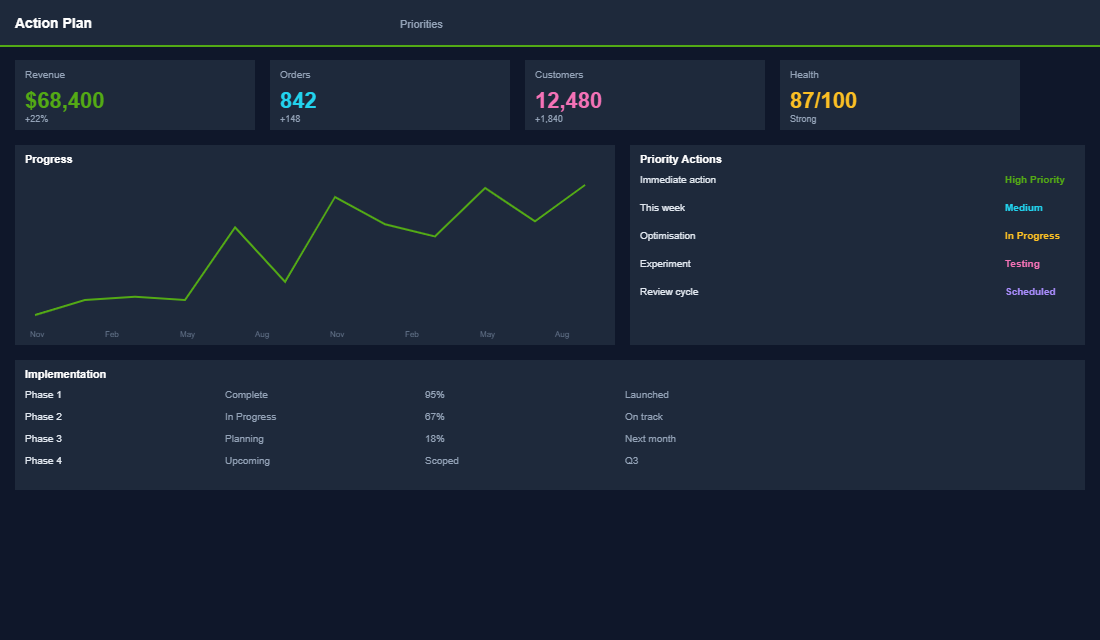
BFCM is not a “set and forget” event. The brands that maximise revenue are the ones monitoring performance in real-time and making adjustments throughout the weekend.
Check your dashboard every 2-3 hours during BFCM. Look at: revenue vs target, channel performance (shift budget to what is working), ad creative performance (pause underperformers, scale winners), email open and click rates, and website speed (traffic spikes can slow things down).
Have contingency creative ready. If your primary ad creative fatigues by Saturday (which it likely will), swap in fresh creative. If a particular product is selling out faster than expected, shift messaging to your next best offer. If a channel is underperforming, reallocate budget to what is working.
Cyber Monday needs its own push. Many brands exhaust their energy on Black Friday and let Cyber Monday coast. This is a mistake. Cyber Monday often generates 30-40% of total BFCM revenue. Send a dedicated Cyber Monday email with fresh messaging (“Missed Black Friday? Cyber Monday deals are live”), and consider extending or refreshing your offers specifically for Monday.
The Margin Maths That Decides Your Discount
Most Aussie founders pick their BFCM discount by looking at what they did last year and what their competitors are shouting about on Instagram. That is not a strategy, that is a reflex. The number you can afford is set by your contribution margin, not by your nerve.
Run this before you design a single creative asset. Take your average order value, subtract cost of goods, subtract shipping and fulfilment, subtract payment processing at roughly 1.75% plus 30c per transaction, and subtract your blended advertising cost. What is left is the money a discount eats into. A store doing $180 AOV on 42% gross margin has about $75 of gross profit per order. Pull $36 out with a 20% sitewide discount and you have just handed away nearly half of it.
The breakeven volume lift is the number that matters. At 42% gross margin, a 20% discount needs roughly a 91% increase in units just to hold the same gross profit. A 30% discount needs about 250% more units. Very few stores hit those numbers, which is why so many brands post a record BFCM revenue figure and a worse December bank balance.
Your practical range: keep sitewide discounts at or under 15% unless you are deliberately clearing stock, and put the aggressive discounting behind bundles, tiered thresholds, and gift-with-purchase offers where you control the margin mix. A “spend $150 save $30” threshold set just above your AOV lifts basket size instead of subsidising the orders you were going to get anyway. If you want the full offer structure rather than a single blunt percentage, work through BFCM offer architecture before you lock anything in.
Two more numbers to hold yourself to. Track contribution margin per order daily through the weekend, not revenue. And set a floor: if a SKU falls below 15% contribution margin after discount and shipping, it comes out of the promotion. Shopify’s own reporting will not do this for you. Build it in a spreadsheet in October, or use Lifetimely or Triple Whale to see net profit per order in something close to real time.
The stock side of this equation is just as unforgiving. Discounting a product you cannot restock until February is a margin decision and an inventory decision at the same time, which is why your promo plan and your BFCM inventory planning need to be built in the same week, by the same person, off the same forecast.
Freeze the Code Before You Need To
The most expensive BFCM failures are almost never marketing failures. They are a last-minute app install, a theme tweak pushed on the Thursday, or a checkout script that only breaks under load. You do not get to debug at 9pm on Black Friday with 400 people in your cart.
Set a hard code freeze date and treat it as immovable. Two weeks out from your first offer going live, nothing ships to the live theme except copy and image swaps through the theme editor. No new apps. No new tracking pixels. No “quick” Liquid changes. Every app you add carries its own JavaScript, and the average Shopify store runs 6 to 12 apps, each one a potential point of failure at peak traffic.
Before the freeze, do a proper clean-out. Uninstall apps you no longer use, then check for orphaned code left behind in theme.liquid, because uninstalling rarely removes the snippets. Run the store through PageSpeed Insights and aim for a mobile Largest Contentful Paint under 2.5 seconds. Every extra second of load time costs roughly 7% of conversions, and on BFCM traffic volumes that is real money.
Then load-test the path that actually matters: homepage to collection to product to cart to checkout, on a real phone, on 4G, with a discount code applied. Do it on the theme you will actually be running. Duplicate your live theme, make the changes there, preview it, and only then publish. The full pre-freeze sequence, including what to test and who signs off, is laid out in the Shopify code freeze playbook.
The same discipline applies to people. Decide now who is watching the store overnight, who answers the support inbox on the Saturday, and who has authority to pull an offer that is losing money. Support volume typically runs 3 to 5 times normal through the BFCM weekend, and unanswered pre-purchase questions convert at zero. Sort your peak season staffing in October, not the week before.
The 30 Days After BFCM Decide Whether It Was Worth It
Here is the part almost everyone skips. You have just spent 90 days and a large chunk of your ad budget acquiring a wave of new customers, most of whom bought at a discount and have no relationship with your brand. What happens in the next 30 days determines whether that was an investment or a very expensive way to move stock.
Discount-acquired customers repeat at meaningfully lower rates than full-price customers, often in the range of 15% to 20% versus 25% to 30% within 90 days. That gap is not fixed. It closes when the post-purchase experience gives them a reason to come back that is not another discount.
Build a dedicated BFCM welcome flow in Klaviyo, separate from your standard one. Tag every BFCM buyer, then send a sequence that leads with product education and care instructions, not another offer. A shipping expectation email on day one, a “getting the most out of it” email on day five, a review request timed to land 3 to 7 days after delivery, and a genuine full-price introduction to the rest of the range around day 21. Expect that sequence to convert 5% to 10% of the segment into a second order.
Watch three metrics through December and January. Second-order rate for the BFCM cohort, benchmarked against your baseline. Return rate, which usually runs 20% to 30% higher on discounted gift purchases and can quietly erase the margin you thought you made. And email engagement decay, because a big influx of discount-hunters can drag your open rates down and hurt deliverability for everyone else if you keep mailing the unengaged.
Finally, run the debrief while it is fresh. First week of December, sit down with the numbers and write up what worked, what broke, and what you would change. Which offer had the best contribution margin, not the highest revenue. Which channel brought customers who came back. Where the site slowed down. That document becomes the first page of next year’s 90-day countdown, and it is worth more than any external BFCM guide because it is about your store.
The Compound Effect of BFCM Excellence
A well-executed BFCM does far more than generate one week of revenue. The customer acquisition during BFCM is massive, these are customers who now know your brand, have experienced your product, and are in your email ecosystem. Converting BFCM buyers into repeat customers over the following 90 days is where the real long-term value lives.
One eCommerce Circle member followed this 90-day framework and grew their BFCM revenue from $128K to $185K year-over-year, a 45% increase. More importantly, 38% of their BFCM new customers made a second purchase within 90 days, generating an additional $42K in post-BFCM revenue. The event was not just a spike, it was a growth catalyst.
BFCM planning is one of the most intensive coaching periods inside the eCommerce Circle, and we start working with members on it 90 days out. If you want a second set of eyes on your offer maths, your inventory position, or your post-BFCM retention plan before the countdown starts, let’s talk.