Influencer marketing for Shopify stores is either the best money you have ever spent or the biggest waste of your marketing budget. There is almost no middle ground. The brands that win with influencers have a system – they know exactly who to partner with, what to pay, how to track results, and when to scale. The brands that lose are the ones sending free product to anyone with 10K followers and hoping for the best.
What’s in This Article
The Australian influencer landscape is particularly interesting because it is small enough that micro-influencers (5K-50K followers) can drive serious results, but big enough that there is real competition for the good ones. If you are an Aussie Shopify store and you are not working with local micro-influencers, you are missing one of the most cost-effective customer acquisition channels available.
We have seen Shopify stores generate $5-$15 in revenue for every $1 spent on influencer marketing – when they do it right. That kind of ROAS beats most paid channels. Here is exactly how to build an influencer program that delivers measurable results, not just vanity metrics.
Why Micro-Influencers Outperform Big Names
The data consistently shows that micro-influencers (5K-50K followers) deliver better ROI than macro-influencers (100K+) for ecommerce brands. The reason is engagement. Micro-influencers typically have engagement rates of 3-6%, compared to 1-2% for macro-influencers. Their audiences are smaller but more trusting, more niche, and more likely to act on recommendations.
For Australian Shopify stores, micro-influencers also offer something macro-influencers cannot: genuine local relevance. An Aussie fitness micro-influencer with 15K followers who genuinely uses your protein powder is more convincing to Australian buyers than a US-based fitness celebrity with 500K followers doing a paid post. Local context matters – Australian consumers are savvy and can smell inauthentic partnerships from a mile away.
The economics also work better at the micro level. A micro-influencer might charge $200-$500 per post or accept product gifting with a small fee. A macro-influencer might charge $5,000-$20,000. For the cost of one macro-influencer post, you could work with 10-20 micro-influencers and get 10-20x the content, 10-20x the unique audiences, and far more data on what messaging and creators resonate.
Finding the Right Influencers for Your Brand
The biggest mistake is choosing influencers based on follower count instead of audience fit. A fashion influencer with 50K followers who attracts 18-year-old fast fashion buyers is useless for a premium Australian linen brand targeting women aged 30-45. Audience alignment matters more than audience size.
Start with your own customers. Your best influencer partners are often already buying your products. Search your customer list, check who is tagging your brand on Instagram, and look at who is leaving positive reviews. Customers-turned-influencers are the most authentic advocates you will find. Tools like Gatsby or SARAL can help you identify customers with significant social followings automatically.
Use hashtag and location research. Search relevant hashtags (#australianmade, #shoplocal, #[your niche] + Australia) and location tags for Australian cities. Look for creators who post consistently, have genuine engagement (real comments, not just emojis from bots), and whose aesthetic and values align with your brand. Spend 30 minutes per week on this research and build a rolling shortlist of 20-30 potential partners.
Vet engagement quality, not just quantity. Before reaching out to any influencer, check their engagement rate (likes + comments / followers), the quality of comments (real conversation vs spam), audience demographics (use tools like HypeAuditor or Modash to check), and content quality and consistency. A 5% engagement rate with genuine comments from Australian women aged 25-40 is infinitely more valuable than a 1% engagement rate from a global audience of teenagers.
The Outreach and Deal Structure That Works
How you approach influencers sets the tone for the entire partnership. A copy-paste DM that says “Hey babe, love your content! Want to collab?” gets deleted instantly. Here is a better approach.
Personalise every outreach message. Reference specific posts you liked, explain why you think their audience would genuinely benefit from your product, and be upfront about what you are proposing. “I noticed your post about sustainable wardrobe staples last week – our linen range is designed for exactly that approach. Would you be interested in trying a few pieces and sharing your honest thoughts with your audience?” This takes more effort but gets 3-5x the response rate of generic messages.
Offer a fair deal structure. For micro-influencers, the most effective structure for Shopify stores is: free product + a flat fee ($200-$500 depending on follower count and engagement) + a unique discount code for their audience (10-15% off) + an affiliate commission (10-15% of sales through their code). This gives the influencer multiple income streams and aligns their incentives with your sales goals.
Set clear deliverables. Specify exactly what you expect: number of posts, Stories, or Reels; key messaging points (not a script – just 2-3 things to mention); disclosure requirements (Australian Consumer Law requires clear #ad or #gifted disclosure); and usage rights (can you reuse their content in your ads?). Put it in a simple one-page brief to avoid misunderstandings.
Tracking ROI: Measuring What Actually Matters
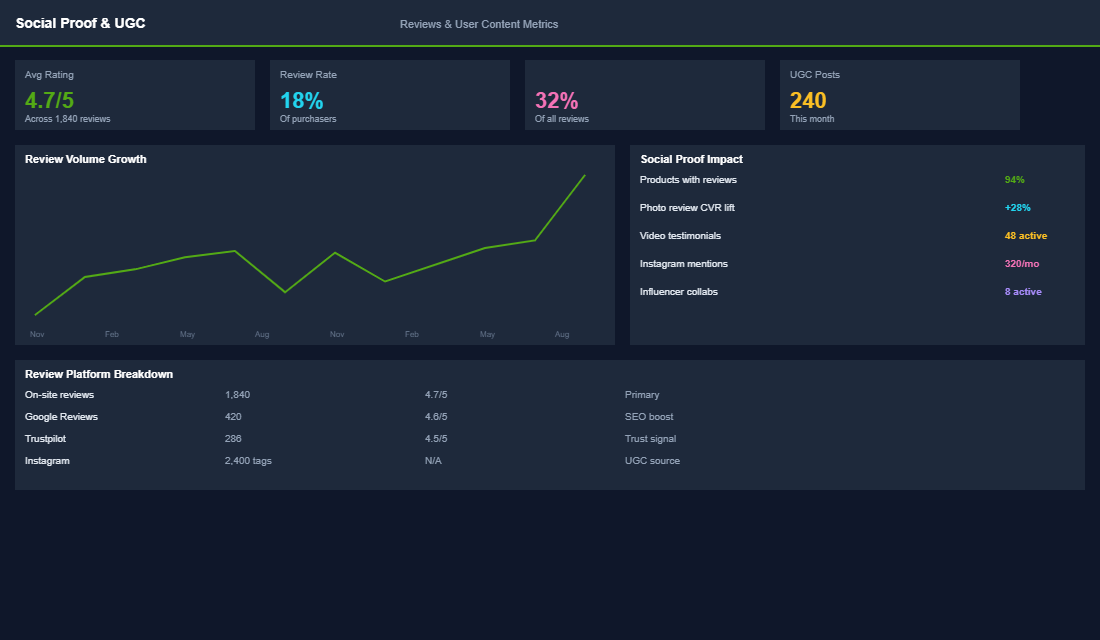
The biggest gap in most influencer programs is measurement. “We got 5,000 likes on the post” is not ROI. Here is how to actually track influencer performance.
Unique discount codes per influencer. Give each influencer a unique code (e.g., SARAH15) that gives their audience a discount and lets you track exactly how many sales each influencer drives. Set these up in Shopify discount codes and check attribution weekly. This is the most reliable tracking method because it does not depend on cookies or platform analytics.
UTM-tagged links. Give each influencer a unique link with UTM parameters: yourstore.com?utm_source=instagram&utm_medium=influencer&utm_campaign=sarah_oct2025. Track these in Google Analytics to see not just sales but also traffic, time on site, and pages viewed from each influencer’s audience.
Calculate true ROI per influencer. Total the cost of working with each influencer (product cost + fees + commission paid) and divide their attributed revenue by that total cost. An influencer who cost you $400 (product + fee) and drove $2,800 in sales delivered a 7x ROI. Track this for every influencer partnership and double down on those delivering above your threshold (typically 3x+ ROI).
Repurpose high-performing content. The real value of influencer content extends beyond the original post. UGC from influencers can be repurposed in your Meta Ads (with permission), on your product pages, in email campaigns, and on your own social channels. A single high-quality influencer video can become your best-performing ad creative for months.
Scaling Your Influencer Program
- Start with 5-10 micro-influencers per quarter. Test different niches, content styles, and deal structures. After one quarter, you will know which type of influencer drives the best results for your brand.
- Build long-term ambassador relationships. Your top performers should become ongoing brand ambassadors, not one-off partnerships. Long-term relationships produce more authentic content and their audiences become warmer to your brand over time. Offer ambassadors better terms: higher commission rates, exclusive products, and early access to launches.
- Create a content flywheel. Every influencer partnership should produce content you can reuse. Budget for usage rights upfront and build a library of UGC that feeds your ads, email, and social channels. This content library becomes one of your most valuable marketing assets.
- Automate what you can. As your program grows beyond 20 active influencers, manual management becomes unsustainable. Platforms like GRIN, Aspire, or CreatorIQ help manage outreach, contracts, content approval, payments, and tracking at scale.
The Tools Stack That Runs Your Influencer Program
Once you have more than five active influencers on the go, manual spreadsheets fall apart fast. The right tooling turns a chaotic side project into a system you can actually scale. Here is the stack most $1M-plus Aussie DTC brands are running, broken down by job.
Discovery and vetting. Modash and HypeAuditor surface lookalikes of creators already converting for you, with audience-quality scores that flag fake followers. SARAL and Gatsby pull from your own customer list to find buyers who already have 5K+ followers – these convert at 2 to 3x the rate of cold creators because they already use the product. Budget AUD $99 to $399 a month for these tools and expect to add 20 to 30 vetted shortlist candidates per quarter.
Outreach and contracts. GRIN, Aspire and CreatorIQ handle bulk personalised outreach, contract e-signing, content approval and payment in one workflow. They are not cheap (AUD $500 to $2,000 a month) but pay for themselves the moment you cross 20 active partnerships. For sub-20 programs, a tight Notion board plus Gmail templates plus PandaDoc gets you 80% of the way for 5% of the cost.
Tracking and attribution. Shopify discount codes are your floor – every influencer gets a unique code. Layer on UTM-tagged links inside GA4, plus a Klaviyo flow that tags any new subscriber who lands via an influencer URL so you can measure 30-, 60- and 90-day LTV by creator, not just first-order revenue. Two ambassadors driving the same first-month sales but 40% different repeat rates is the kind of insight that changes who you renew. We cover the underlying retention math in our cohort analysis playbook.
The 30-Day Quick-Start: Your First 10 Partnerships
If you are starting from zero, here is the four-week plan that gets a working program in market without blowing your budget on the wrong creators.
Week 1 – Customer mining. Pull a list of your top 200 customers by LTV. Cross-reference with Instagram and TikTok. Any customer with 3K-plus followers and content that fits your brand goes onto a shortlist. Expect to find 8 to 15 strong candidates from a list that size. Send a warm DM acknowledging their orders – response rates from existing customers run 45 to 70%, versus 5 to 10% for cold outreach.
Week 2 – Hashtag and lookalike research. Spend two focused sessions inside Modash (or manual Instagram search) building a list of 30 more creators that look and sound like your shortlist. Australian-only filter on. Engagement rate above 3%. Audience age and gender within 10% of your customer base. Score each one 1 to 5 on fit, content quality and engagement quality. Cut to your top 10.
Week 3 – Outreach and briefs. Send 20 personalised outreach messages (10 customer-creators, 10 cold). Expect 6 to 10 yeses. Send each one a one-page brief with product, key messages, deliverables and deadline. Build a Shopify discount code per creator, a UTM link per creator, and add them to a tracking sheet with cost, deliverables and target ROAS.
Week 4 – Launch and learn. Posts go live. Measure first-week conversions, save-rate, profile visits and code redemptions for each creator. Anything above 3x ROAS gets a follow-up offer for month two. Anything below 1x gets a polite thank-you and a note in your CRM never to renew. Inside 30 days you will know which creator profile drives sales for your specific brand – and you can replicate it 20 times in quarter two. Pair this loop with the email side using our welcome flow sequence so new traffic from creators actually converts twice.
Influencer Marketing Is a System, Not a Gamble
The stores that treat influencer marketing as a hope-based strategy get inconsistent results. The stores that build a system – with clear targeting criteria, standardised deal structures, rigorous tracking, and a content repurposing pipeline – turn influencers into one of their most profitable and scalable acquisition channels. Start small, measure everything, and scale what works.
What to Pay Aussie Micro-Influencers: Real 2026 Rate Benchmarks
The number one question founders ask is “what do I actually pay them?” Rates vary, but here are the ballpark ranges Aussie brands are paying micro-creators (roughly 5k to 50k followers) in 2026.
- Gifting only: Free product in exchange for a story or post. Works best under about 15k followers and for products over 80 AUD in value.
- Paid post: Commonly 150 to 600 AUD per in-feed post or Reel at this tier, depending on engagement and niche.
- Monthly retainer: 400 to 1,200 AUD a month for a set number of posts plus stories. Cheaper per asset and builds genuine familiarity with their audience.
- Performance top-up: A flat base plus a commission or bonus on tracked sales. Aligns their incentive with your revenue.
Whatever you pay, secure usage rights in writing so you can run their content as paid ads. A creator asset that converts organically is often your best performing ad, and the right to whitelist it into your Meta ad account can be worth more than the post itself.
Stay on the Right Side of the ACCC: Disclosure and Usage Rights
Influencer marketing in Australia is regulated, and the ACCC has been active on misleading endorsements. Every paid or gifted collaboration must be clearly disclosed. A buried hashtag does not cut it.
Make disclosure a non-negotiable line in your brief: a clear “paid partnership” label or an obvious #ad up front, plus the platform’s own paid-partnership tag. It protects you, it protects the creator, and Aussie audiences trust honest disclosure more than they punish it. Pair the social proof creators generate with on-site reviews using our product reviews playbook so the trust they build carries all the way to the product page.
Inside the eCommerce Circle, influencer strategy sits across our Promotion and Prospects pillars. We help members find the right local Aussie creators, structure partnerships that drive measurable sales, and build the tracking systems that separate guesswork from data-driven growth. If you want to layer creator traffic onto a store that already converts hard, pair this with our landing page architecture framework and our cart recovery email flow so every paid visit has the best possible shot at converting. If you want a coach to look over your current setup and help you build a creator program that pays for itself in 60 days, let’s talk.