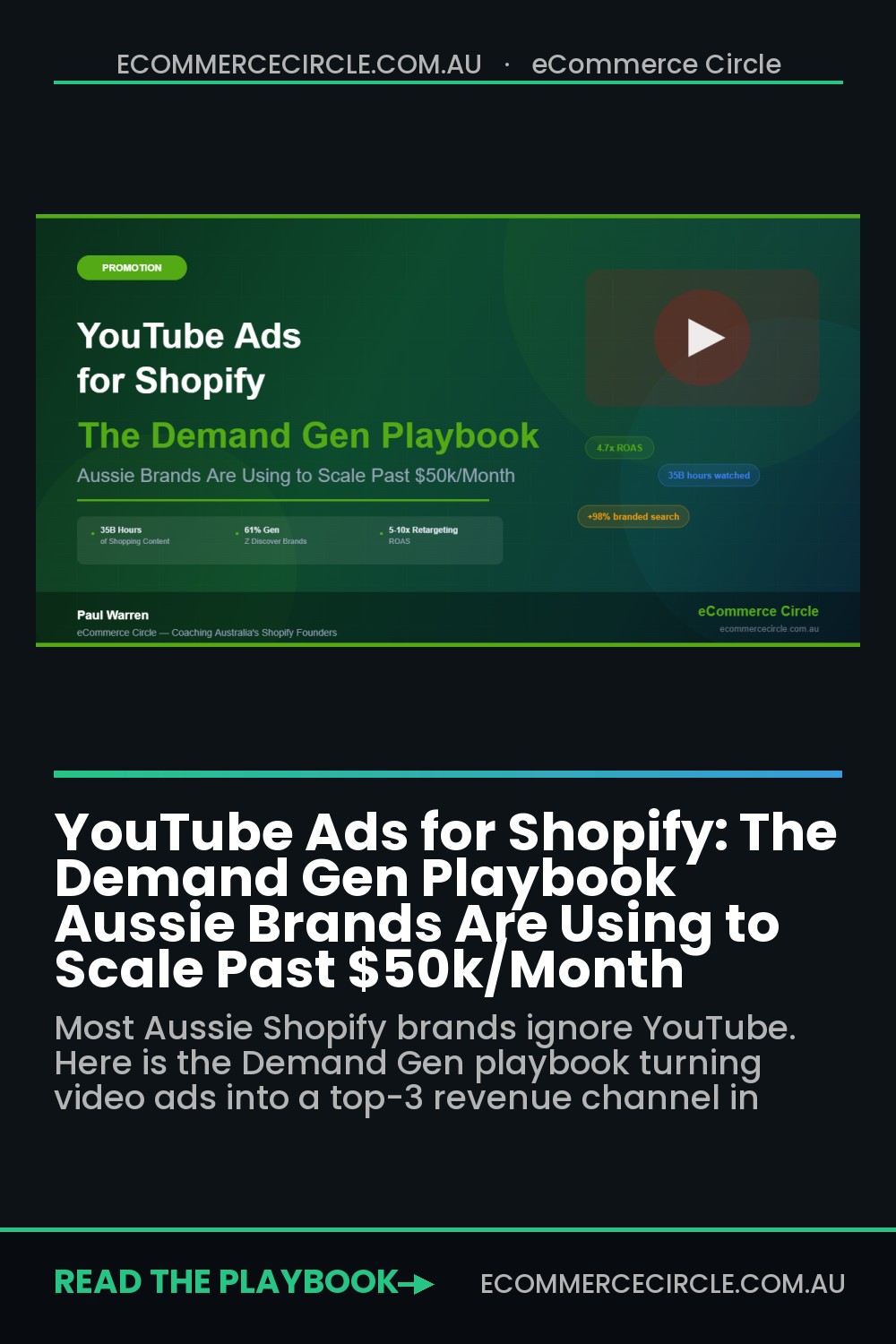
Here is a pattern that keeps showing up in the fastest-growing Shopify brands right now: they are not relying on Meta alone. They are running YouTube as a second engine, and it is changing what is possible at every revenue level.
What’s in This Article
Most Shopify operators treat YouTube as either a platform for brand awareness or something they will “get to eventually.” That is a costly mistake. In 2026, YouTube is the most underutilised paid channel in the Shopify ecosystem, and the brands that have figured it out are seeing ROAS numbers that leave their Meta campaigns behind.
Users watched more than 35 billion hours of shopping-related content on YouTube in the past year, a 250% year-on-year increase. The audience is there. The purchase intent is building. The question is whether your brand shows up.
Why YouTube in 2026 Is a Different Beast
YouTube has changed significantly over the past two years. The platform moved from being a video-awareness channel to a full-funnel commerce engine. The biggest shift: Google merged its Video Action Campaigns into a new format called Demand Gen. This campaign type serves across YouTube (in-stream and Shorts), Google Discover, and Gmail in a single campaign. You are no longer choosing between YouTube and social-style discovery. You get all of it, managed from one place.
YouTube Shopping also expanded into Australia through the Shopify integration. Australian merchants can now sync their product catalogues directly to YouTube, turning video content into a shoppable storefront without any additional development work.
And here is the stat worth sitting with: 61% of Gen Z say YouTube has helped them discover brands they had never heard of. For Shopify brands targeting buyers under 35, that discovery layer is worth its weight in ad budget.
The Three-Tier YouTube Funnel
Before you set up a single campaign, you need to understand how YouTube fits into your full funnel. The mistake most brands make is running cold traffic campaigns and expecting last-click conversions. YouTube is not a last-click channel. It is a mid-funnel engine that warms audiences so your Meta and email campaigns convert harder.
Think of it this way. Search captures demand that already exists. YouTube creates and nurtures it. The best-performing Google Ads accounts in 2026 use YouTube to warm audiences before those buyers ever type a branded query into Google Search.
- Top of funnel. Bumper ads (6 seconds, non-skippable) and non-skippable in-stream (15 seconds) for reach and awareness. Use these for new market penetration or product launches.
- Mid-funnel. Skippable in-stream and Demand Gen campaigns for consideration and product education. This is where most of your budget should sit.
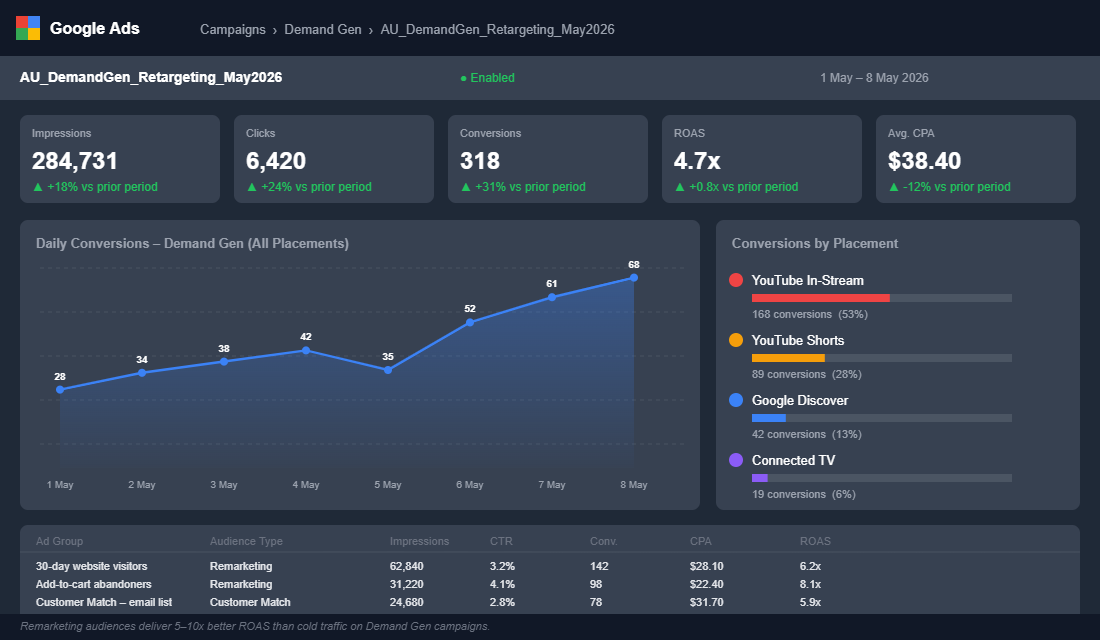
- Bottom of funnel. In-feed video ads and Demand Gen with Customer Match for conversion-focused retargeting. Remarketing audiences on YouTube consistently deliver 5 to 10 times better ROAS than cold traffic.
Your goal in the first 30 days is to build the mid and bottom funnel first. You need conversion signal before you need scale.
Demand Gen Campaigns: The Ecommerce Brand’s Secret Weapon
Demand Gen is the most powerful campaign type on YouTube for Shopify brands right now, and most Australian operators have not touched it. Here is what makes it different from standard YouTube campaigns.
Demand Gen supports product feed integration. Connect your Google Merchant Center catalogue and Google surfaces dynamic product carousels alongside your video. A viewer watches your 30-second brand video and sees a horizontal scroll of your actual products at the bottom of the screen, priced, named, and clickable. For brands with a catalogue of 20 products or more, this feature alone is worth the setup time.
Creative in Demand Gen also works differently to search. The viewer is not looking for you. You are interrupting them, and the creative has to earn that attention in the first three seconds. This is not a place for static product shots or talking-head brand spiels. You need a hook. Ideally, it looks and feels like native content on the platform.
On bidding: start Demand Gen campaigns on Maximise Conversions with a target CPA. Let Google gather signal for 50 to 100 conversions before tightening ROAS targets. If you pull the lever too early, you constrain delivery and the algorithm never optimises properly. One more thing: Demand Gen campaigns that include Connected TV (think YouTube on smart TVs) drive an average of 7% additional conversions at the same return on investment. If you are excluding CTV placements, you are leaving free conversions on the table.
YouTube Shopping: Turn Your Video Content Into a Storefront
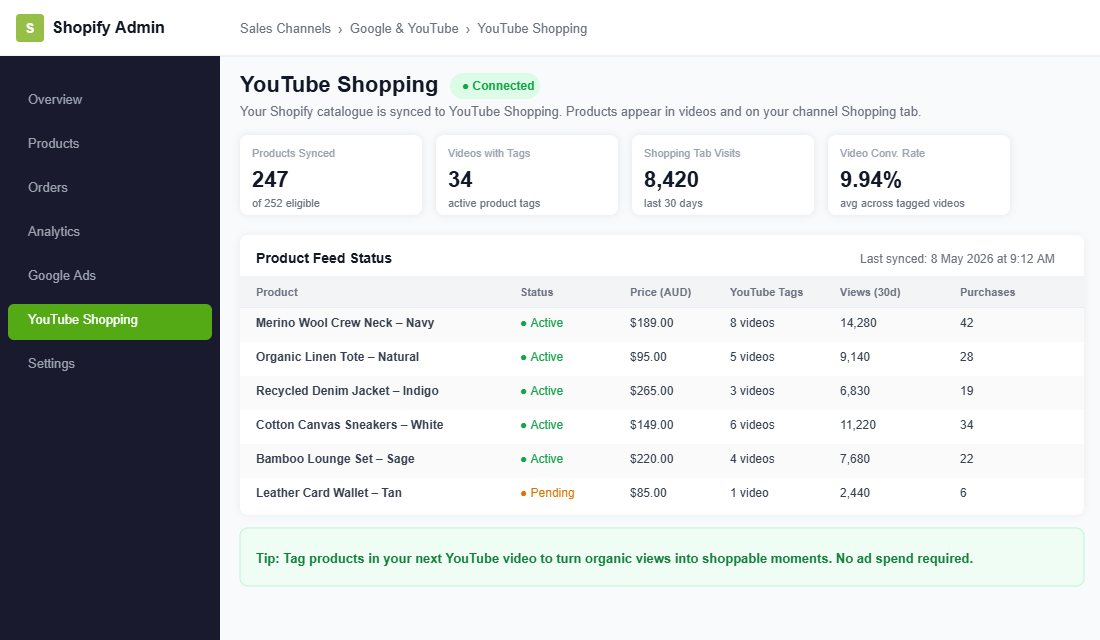
If you have a Shopify store and you have not set up YouTube Shopping, that is the first thing to fix. Through the Google and YouTube app on Shopify, you can sync your product catalogue to YouTube. Your products appear in the Shopping tab on your channel, inside videos your team publishes, and in creator videos if you opt into YouTube’s affiliate programme.
The results from brands that have done this are compelling. Apolla, a US-based performance socks brand, saw a 9.94% video conversion rate after connecting their YouTube content to their product catalogue. Nearly one in ten people who watched their shoppable videos purchased. That is not a metric you see on any other channel.
The setup is straightforward for any Shopify merchant.
- Install the Google and YouTube app from the Shopify App Store.
- Connect your Google Merchant Center account (the same one you use for Google Shopping ads).
- Sync your product feed and resolve any feed errors.
- Enable YouTube Shopping in your channel settings.
- Tag products in your existing video content using YouTube Studio.
From there, any video you publish can have products tagged either in the description or overlaid on the video as shopping cards. Organic videos included, no ad spend required.
Creative Strategy: What Actually Works on YouTube
The biggest reason YouTube campaigns fail is not targeting, budget, or bidding. It is creative. Specifically, creative that was built for Facebook and repurposed for YouTube without any changes. YouTube viewers have different expectations. The platform rewards storytelling, pattern interruption, and content that matches the format of the channel itself.
Here is what works for Shopify brands in 2026.
- The Problem-Agitate-Solution hook (first 5 seconds). Lead with the problem your product solves, not your brand name. “If you have ever struggled with X, you need to see this.” You have five seconds before the skip button appears. Use them to hook, not to introduce yourself.
- Authentic UGC-style content for Shorts. YouTube Shorts favours vertical, native-looking content. Repurposing your best-performing TikTok or Instagram Reels content for Shorts is a legitimate and effective strategy. Google’s own data shows creator-style assets in Demand Gen campaigns drive a 30% increase in conversion lift on Shorts on average.
- Testimonial-led long-form for high-AOV products. For products priced above $120 AUD, longer content works. Take your best customer testimonial, build a short documentary around it, and run it as a skippable in-stream ad to your warm audiences. The viewer who sits through 90 seconds of this is already sold.
- Split-test the hook, not the product. The variable that matters most is the first five seconds. Keep everything else the same and test three different hooks. Most brands see 30 to 50% improvement in ROAS once they find the hook that resonates with their audience.
Solving the YouTube Measurement Problem
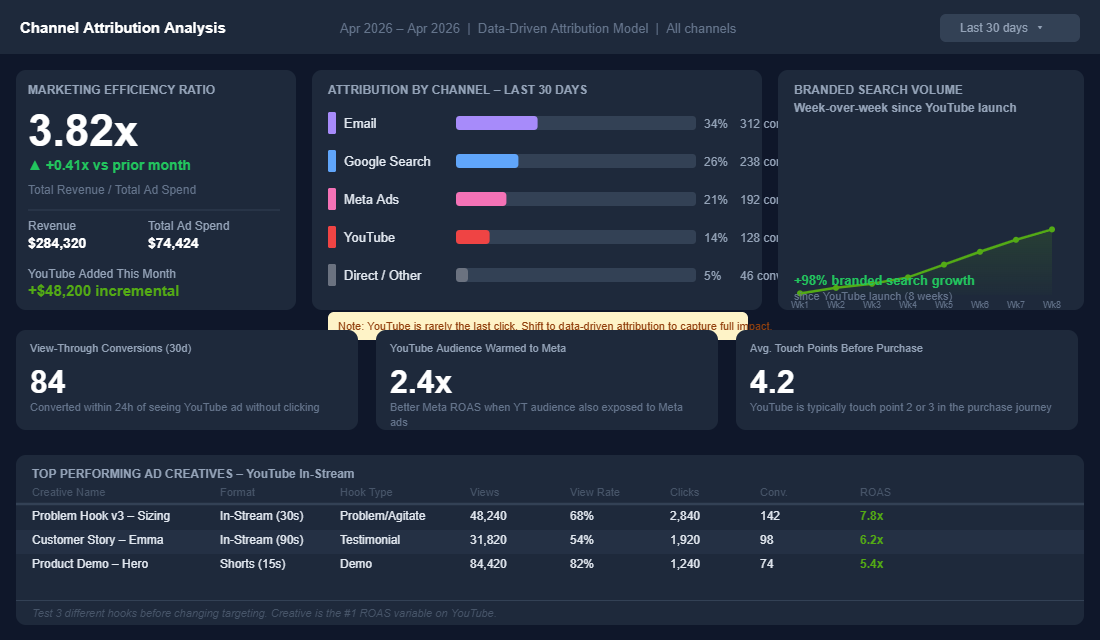
YouTube attribution is the biggest frustration Shopify operators have with the channel, and it is a legitimate one. Most stores are running last-click attribution in Google Analytics. YouTube is rarely the last click. A viewer watches your ad, searches your brand on Google three days later, and converts via search. Google Ads sees that as a search conversion. YouTube gets zero credit.
Two things fix this. First, shift to a data-driven attribution model in Google Ads. This distributes credit across every touchpoint that contributed to the conversion, including YouTube views. It requires at least 300 conversions per month to activate, but if you are at that volume, this is non-negotiable. Second, run a simple incrementality test: pause your YouTube spend for two weeks and watch what happens to your branded search volume and direct traffic. If both drop, YouTube is driving real demand. Most brands that run this test are surprised by the magnitude.
Marketing Efficiency Ratio (MER) is also a useful frame here. If your total revenue divided by total ad spend goes up or stays flat while you are running YouTube, YouTube is contributing, even if last-click attribution says otherwise. Track MER monthly, not just channel-level ROAS, and you will get a clearer picture of what is actually driving growth.
Your 30-Day YouTube Launch Plan
You do not need a production studio or a big budget to start on YouTube. Here is a lean 30-day plan any Aussie Shopify brand can execute.
- Week 1: Set up the foundation. Install the Google and YouTube app on Shopify, connect your Google Merchant Center account, sync your product feed, and enable YouTube Shopping. Zero ad spend required. Tag products in your existing video library.
- Week 2: Launch your first Demand Gen campaign. Use your best-performing static image creatives from Meta as a starting point. Budget: $40 to $60 per day. Target your remarketing audiences only: website visitors from the past 30 days, add-to-cart abandoners, and your email list via Customer Match.
- Week 3: Add a video creative. You do not need a production crew. Film a 30-second problem-solution hook using your phone, add subtitles, and upload it to your Demand Gen campaign. Give each creative a minimum of 7 days before drawing conclusions.
- Week 4: Review and decide. Calculate your blended MER with and without YouTube spend. If you see lift in overall revenue efficiency, increase the budget. If results are flat, change the creative before changing the targeting.
Most Shopify brands that execute this plan start seeing meaningful signal within 60 to 90 days. YouTube is not a switch you flip. It is a channel you build, and it compounds over time.
Budgets, Bids and Benchmarks: What to Spend at Each Stage
The question every founder asks first: how much do I need to spend to make YouTube work? Less than you think, but more than a token test. Here is the progression that works for Aussie Shopify brands.
Testing phase ($50-$100/day): Run a single Demand Gen campaign with 3-4 creatives against your best-performing Meta audience translated into YouTube terms. You need roughly 50 conversions per month for the algorithm to learn, so if your average order is $80 and your target cost per acquisition is $40, budget at least $2,000-$3,000 AUD for the first month. Anything less and you are not testing, you are donating.
Scaling phase ($150-$400/day): Once your cost per acquisition holds within 20% of your Meta CPA for two consecutive weeks, increase budget 20% every 3-4 days. Never double overnight; Demand Gen re-enters learning mode and your CPA can spike 40-60% for a week.
The benchmarks that tell you it is working:
- CPM: $8-$18 AUD for Demand Gen in Australia (versus $15-$35 on Meta for the same audience)
- Cost per view (skippable in-stream): $0.05-$0.12 AUD; above $0.15 your creative hook is weak
- View rate: 25-35% is healthy; under 20% means your first five seconds are not earning the skip
- Click-through rate: 0.5-1% for Demand Gen; above 1% means creative and audience are properly matched
- New customer percentage: aim for 60%+ of YouTube conversions being first-time buyers, because that is the whole point of a demand engine
Bid strategy progression: start with Maximise Conversions (no target), let it run two weeks, then layer in a target CPA set 15-20% above your actual average. Moving to target ROAS only makes sense once you have 100+ conversions of history. Jumping straight to a tight tROAS on day one is the single most common reason Aussie brands conclude that YouTube does not work for them.
Track all of this weekly alongside your blended numbers, not in isolation. If you have not built that habit yet, our guide to the weekly metrics dashboard every Shopify owner should be checking shows you exactly which eight numbers to watch and how YouTube spend should show up in them.
The Compounding Effect: Why YouTube Makes Every Other Channel Cheaper
The brands getting the most out of YouTube are not treating it as a standalone channel. They are using it to feed the rest of their marketing stack.
YouTube builds search demand for your brand. That demand flows into Google Search, into email open rates for subscribers who now recognise your name, and into Meta retargeting audiences that convert faster because the buyer has already seen your content. When you run YouTube alongside Meta, email, and SMS, your cost per acquisition across every channel tends to drop. The warm audience YouTube creates is more valuable than any single conversion it directly produces.
This is the compounding logic that separates brands scaling past $100k per month from brands stuck at $30k. It is not about finding a cheaper traffic source. It is about building a system where every channel makes the others more efficient.
Inside eCommerce Circle, paid media channel strategy, including how to layer YouTube into an existing Meta and email stack, is one of the core pillars we work on with every member. If you want a second opinion on your paid media mix, let’s talk.